
Last updated: October 10, 2026. Deadlines and procedures vary by state - confirm the exact rules with your state unemployment agency before you file.
Receiving a denial letter for your unemployment claim can feel devastating, especially when you know you lost your job through no fault of your own. But here is the reality that most people do not realize: a significant percentage of initial determinations are overturned on appeal. State unemployment agencies process thousands of claims rapidly, and mistakes happen frequently — employers provide incomplete or inaccurate information, claims examiners misapply the law, and legitimate evidence gets overlooked in the rush to process volume. The appeals process exists precisely because the system acknowledges that first decisions are not always correct. If your claim was denied because of something related to what can disqualify you from unemployment benefits, you still have the right to challenge that determination and present your side of the story under oath. Before you do anything else, use the unemployment benefits calculator for your state to confirm the amount at stake, because knowing what you stand to recover can help you decide how much time and effort to invest in your appeal.
Why Claims Get Denied in the First Place
Understanding why your claim was denied is the foundation of a successful appeal, because you cannot effectively challenge a decision you do not fully understand. The denial letter you receive — formally called a Notice of Determination or Determination Letter — will state the specific reason your claim was rejected and the legal statute or regulation the agency relied on. Read this letter carefully, multiple times, and identify the exact finding you disagree with. The most common denial reasons include the employer contesting your claim by alleging misconduct or that you voluntarily quit without good cause, insufficient base-period wages or work history to meet the monetary eligibility threshold, a determination that you are not able or available to work, failure to meet work-search requirements, or an issue with the way you separated from your most recent employer. Each of these reasons requires a different appeal strategy, which is why identifying the specific ground for denial is your critical first step.
Many denied claimants make the mistake of simply writing "I disagree" on their appeal form and hoping for the best. This approach almost always fails because it does not give the hearing officer any basis to overturn the original decision. Your appeal needs to specifically address the reason stated in the denial letter and explain why the finding was incorrect based on the facts of your situation. If the employer alleged misconduct, your appeal should describe the circumstances from your perspective and reference any evidence that contradicts the employer's version of events. If the issue is monetary eligibility, you may need to provide wage records or pay stubs that the agency did not have when making the initial calculation. Understanding how the unemployment benefits system works helps you frame your appeal in terms the agency understands, because the appeals process is fundamentally a legal proceeding that follows specific rules of evidence and procedure.
Filing Your Appeal: Deadlines and Procedures
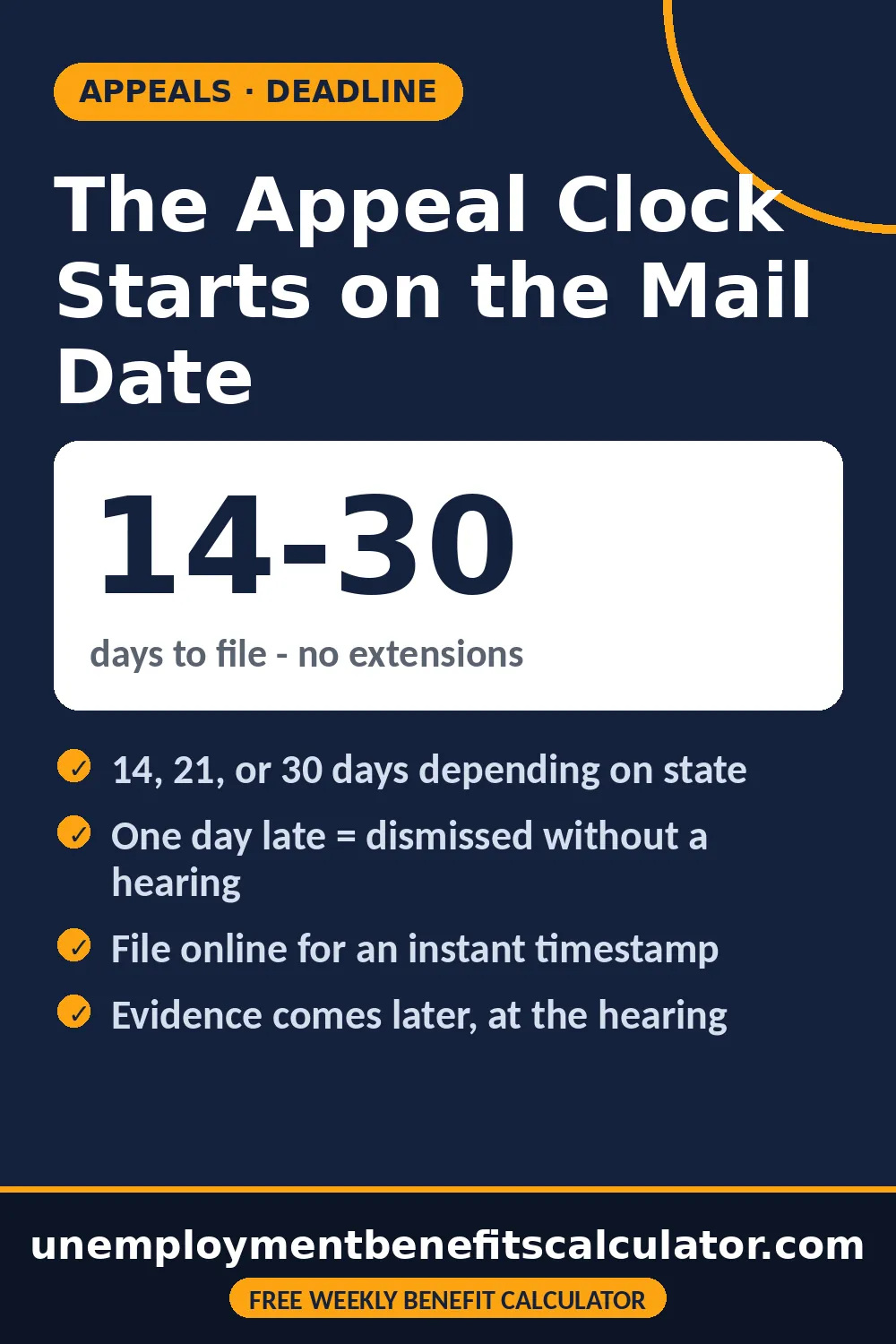
The single most important rule in the appeals process is the deadline. Every state gives you a limited window to file your appeal after receiving the denial notice, and this deadline is strictly enforced with virtually no exceptions. In most states, the deadline is either fourteen, twenty-one, or thirty calendar days from the date the determination was mailed — not the date you received it, but the date on the letter. If you file even one day late, your appeal will be dismissed without a hearing, regardless of how strong your case might be. Some states allow a narrow exception for good cause, such as a documented hospitalization that prevented you from filing, but this is rarely granted and should never be relied upon. File your appeal the same day you receive the denial notice if possible, and certainly within the first week. You can always supplement your filing with additional evidence later, but you cannot file late and get a second chance.
Most states offer multiple ways to file your appeal: online through the unemployment portal, by fax, by mail, or in person at a local office. Online filing is the fastest and provides an immediate confirmation, which creates a timestamped record that your appeal was received within the deadline. If you file by mail, send it via certified mail with return receipt so you have proof of timely filing. Regardless of how you file, keep a copy of everything you submit, including the appeal form itself, any attached statements, and the confirmation receipt. Your appeal does not need to be lengthy or legally sophisticated at this stage — a brief statement identifying the determination you are appealing and the specific reason you believe it was incorrect is sufficient. You will have the opportunity to present your full case and evidence at the hearing. If your denial was related to quitting your job and claiming unemployment, your appeal statement should mention that you believe you had good cause for leaving, and you will present the specific facts at the hearing.
| Step | What happens | Your clock |
|---|---|---|
| Denial notice | Determinations letter states the reason and the statute the agency relied on | The mail date on the letter starts every deadline below |
| File your appeal | Online, fax, mail, or in person - online gives you an instant timestamped confirmation | 14-30 calendar days from the mail date in most states; no extensions |
| Hearing notice | Agency schedules the phone or video hearing and explains evidence submission rules | Usually one to two weeks after filing |
| Hearing | ALJ/Referee presides; both sides testify under oath, present evidence, cross-examine | Evidence must be submitted in advance in most states |
| Decision | Written findings of fact and conclusions of law; benefits reinstated with back pay if you win | One to four weeks after the hearing |
| Next-level appeal | Board of review or commission examines the hearing record for legal errors | Often just 10-15 days from the decision |
Timeline ranges summarized from state agency procedures as of October 10, 2026. Your state's exact deadlines control - read your determination letter and confirm on your agency site.
Knowing what you are fighting for keeps the work in perspective - the weekly benefit formula determines the amount riding on your appeal, and if the denial traced back to your separation details, our guide to what disqualifies you from unemployment explains how agencies classify each reason.
Gathering Evidence Before the Hearing
The hearing is your one real opportunity to present evidence and testimony supporting your claim, so thorough preparation is essential. Start gathering evidence immediately after filing your appeal — do not wait for the hearing notice to arrive, because you may have only a week or two between receiving the notice and the hearing date. The type of evidence you need depends on the reason for denial, but the most persuasive categories include written documentation from your employer such as performance reviews, emails, text messages, warning notices, termination letters, and company policy documents. If your employer claimed you were fired for misconduct, gather anything that shows the alleged incident was not as the employer described it, or that the employer did not follow their own progressive discipline policy, or that similar behavior by other employees was not treated as misconduct.
Witness testimony can be extremely powerful at a hearing. If coworkers saw the incident that led to your termination, or can testify about the working conditions that caused you to quit, ask them to provide written statements and, ideally, to appear at the hearing as witnesses. Former supervisors who left the company before your termination can be particularly credible witnesses because they have no current loyalty to the employer. Medical records are critical if your case involves a health-related reason for leaving or inability to perform certain duties, and you should obtain a letter from your doctor specifically addressing your work limitations and how they related to your separation. If you are dealing with a hostile work environment, documentation of your internal complaints to human resources, EEOC filings, or any response from the company is essential. Financial records matter too — if your claim involves questions about taxable unemployment income or benefit calculations, bring pay stubs, tax documents, and bank records that verify your earnings history.
What Happens at the Hearing
Unemployment appeal hearings are administrative proceedings, not court trials, but they follow formal rules of evidence and procedure that can feel intimidating if you are not prepared. Most hearings in 2026 are conducted by telephone or video conference, with the hearing officer — typically called an Administrative Law Judge or Referee — presiding from their office while you and the employer participate remotely. The hearing officer will begin by explaining the procedures and the issues to be decided, then swear in all participants. The party who filed the appeal usually presents their case first, though some states allow the agency to present the initial determination and the reasons for it before either party testifies. Each side has the opportunity to testify under oath, present documents and other evidence, call witnesses, and cross-examine the other side's witnesses. The hearing officer may also ask questions directly to clarify facts or resolve contradictions in the testimony.
One crucial aspect of the hearing that many claimants underestimate is the opportunity to cross-examine the employer's representative. If your former employer testifies about events that did not happen as they describe, or makes claims that are inconsistent with written documentation you possess, you have the right to question them about these discrepancies. Effective cross-examination is not about arguing with the employer or making speeches — it is about asking specific, focused questions that expose weaknesses in their version of events. For example, if the employer claims you were fired for excessive absenteeism but your attendance records show only two unexcused absences in three years, asking the employer to reconcile their testimony with those records can be devastating to their case. If you previously had to certify for unemployment benefits on a biweekly basis, you already have experience answering formal questions under oath, and the hearing follows a similar principle — answer honestly, stick to the facts, and avoid volunteering information that was not specifically asked for.
If the Employer Does Not Show Up
One of the most favorable scenarios for an appellant is when the employer fails to appear at the hearing. This happens more often than most people expect — some employers contest claims as a matter of routine policy but are unwilling to invest the time and resources to participate in an actual hearing, especially for former employees they have already replaced. When the employer does not appear, the hearing officer will typically proceed with the hearing anyway, but the only evidence and testimony before the officer will be yours. This dramatically increases your chances of success because the employer's version of events — which was the basis for the original denial — goes unrepresented and unproven. The hearing officer may still ask you questions to satisfy themselves that your version is credible, but without the employer there to present contrary evidence, the burden shifts heavily in your favor.
However, an employer no-show does not guarantee an automatic win. If the written evidence already in the record clearly supports the denial — for instance, if you admitted in your initial claim filing that you were fired for violating a company rule — the hearing officer can still uphold the denial based on that existing evidence alone. Additionally, some states allow the employer to request a reopening of the case if they missed the hearing for good cause, such as a medical emergency or a technical failure that prevented them from connecting. If your case is reopened, you may have to attend a second hearing, and the employer will almost certainly show up the second time. Treat every hearing as if the employer will be there fully prepared, and you will never be caught off guard. If you were working part-time while receiving unemployment and the issue involves earnings reporting, make sure you have all your pay records organized and ready regardless of whether the employer appears.
Receiving and Understanding the Decision
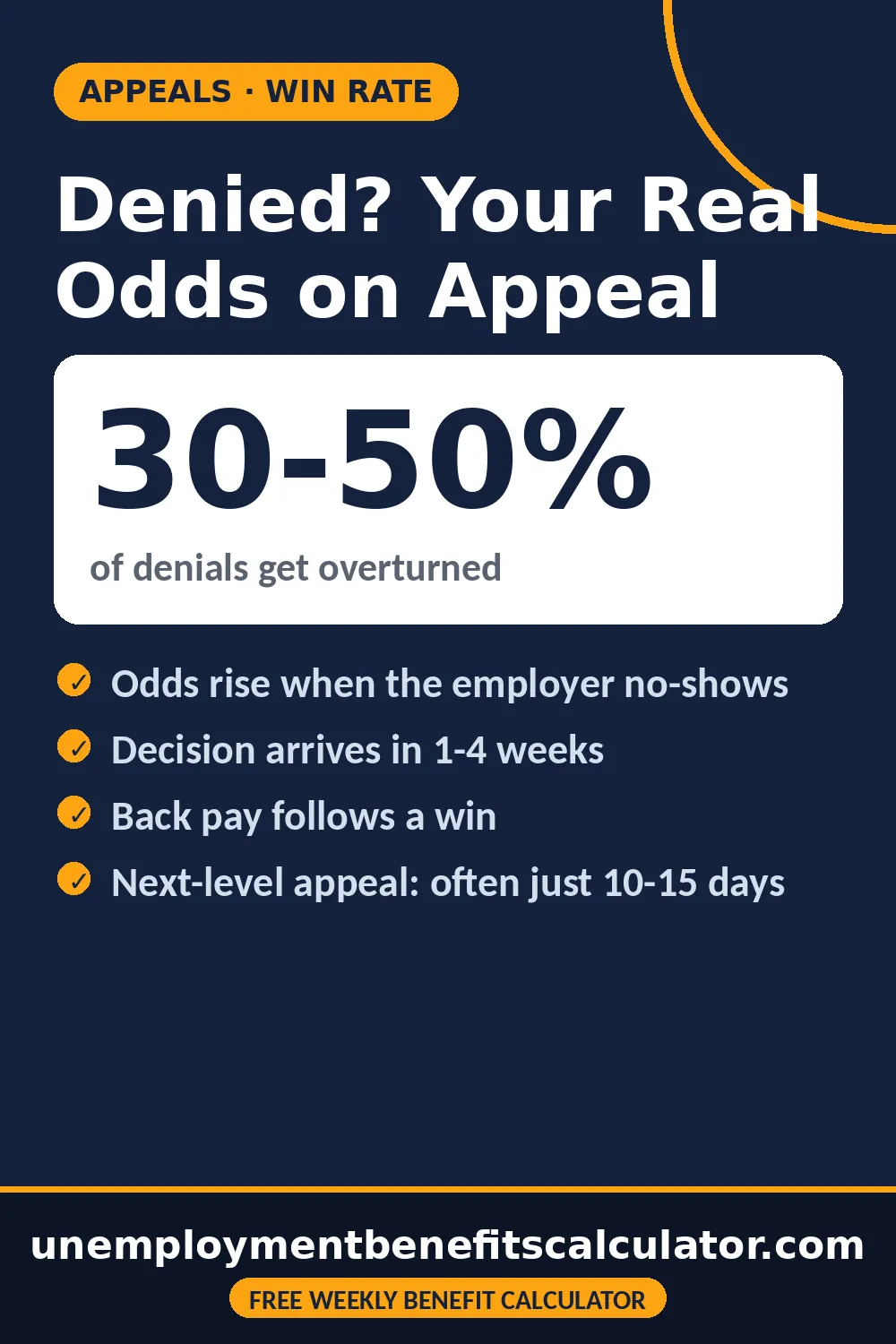
After the hearing, the Administrative Law Judge will issue a written decision, typically within one to four weeks depending on the state and the complexity of the case. The decision will contain findings of fact, conclusions of law, and the reasoning behind the ruling. If the decision is in your favor, your benefits will be reinstated and you will receive back pay for the weeks you were eligible but not paid, minus any earnings you had during that period. If the decision goes against you, the denial is upheld, but you still have further appeal options available. The decision letter will explain your next level of appeal and the deadline for filing it, which is usually shorter than the initial appeal deadline — often ten to fifteen days. Read the decision carefully even if you won, because it may contain conditions or limitations on your ongoing eligibility that you need to understand.
If you won your appeal, be aware that the employer also has the right to appeal the hearing decision, so your victory is not final until the appeal deadline has passed without the employer filing, or until any employer appeal is resolved in your favor. During this period, continue certifying for benefits on schedule, because if the employer appeals and wins later, you could be hit with an overpayment for any weeks where you were not actually eligible. If you lost your hearing, do not give up — the next level of appeal goes to a board of review or commission, which reviews the hearing record for legal errors. This board typically does not hear new testimony, so the record from your hearing is critically important. This is why presenting a thorough and well-documented case at the initial hearing matters so much — you rarely get a second chance to introduce evidence that you could have presented the first time. For those wondering how long it takes to get your first unemployment check after winning an appeal, payments usually begin within two to three weeks of the favorable decision, with back pay following shortly after.
Should You Get Legal Representation?
You are not required to have a lawyer or representative at an unemployment hearing, and many claimants successfully represent themselves. However, having representation can make a real difference, particularly in complex cases involving misconduct allegations, hostile work environment claims, or situations where the employer is represented by counsel. Legal aid organizations in many states provide free representation for unemployment appeals to qualifying low-income claimants, and some private employment attorneys work on contingency, meaning they only get paid if you win. If your potential benefit amount is substantial — for example, if you are entitled to the maximum weekly benefit for the full twenty-six weeks, which could total over ten thousand dollars — investing in legal representation may be well worth the cost. On the other hand, if the amount at stake is modest and the facts of your case are straightforward, self-representation can be perfectly adequate with proper preparation.
If you choose to represent yourself, the most important thing is to treat the hearing with the same seriousness you would give to a court proceeding. Prepare a clear opening statement that summarizes your position, organize your evidence in a logical order with copies for the hearing officer and the employer, write out the questions you want to ask during cross-examination, and practice delivering your testimony concisely without rambling or getting emotional. Some states offer self-help resources specifically for unemployment hearings, including guides on their website, informational videos, and in some cases, pre-hearing conferences where a staff member explains the process. Take advantage of every resource your state provides, and remember that the hearing officer is a neutral fact-finder, not an advocate for either side. State-specific rules can vary significantly, so check the resources for your state — whether that is California unemployment benefits, New York unemployment benefits, Oregon unemployment benefits, or any other state — to understand the exact procedures that will apply at your hearing.
Frequently Asked Questions About Appealing an Unemployment Denial
How do I write an appeal letter for unemployment?
Keep it short and specific: identify the determination you are appealing by date, state the exact reason given in the denial letter, and explain in a few factual sentences why that finding is wrong in your case. You do not need legal language at this stage - your full evidence comes out at the hearing.
What is the deadline to appeal an unemployment denial?
In most states you have 14, 21, or 30 calendar days from the date the determination was mailed - not the date you received it. One day late usually means dismissal without a hearing, so file the same week, ideally online for an instant timestamped confirmation.
What are my chances of winning an unemployment appeal?
Industry experience puts the overturn rate at roughly 30-50%, and the odds improve substantially when the employer fails to appear at the hearing or when you have written evidence that contradicts their account. A specific, well-documented appeal beats a generic "I disagree" every time.
What happens if my employer does not show up to the hearing?
The hearing proceeds with only your evidence, which dramatically improves your odds - the employer's version goes unproven. But it is not an automatic win: the officer can still uphold the denial if the written record already supports it, and some states let employers reopen for good cause.
Do I need a lawyer for an unemployment appeal hearing?
No - many claimants win representing themselves. But free legal aid representation exists in many states for qualifying claimants, and some employment attorneys take appeals on contingency. Representation matters most in misconduct cases or when the employer has counsel.
What happens after I win my unemployment appeal?
Benefits are reinstated and back pay arrives for the eligible weeks, usually starting within two to three weeks of the favorable decision. Keep certifying every week during the appeal window, because the employer can appeal too - and weeks you failed to certify are not payable.
Can my employer appeal if I win the hearing?
Yes. Your win is not final until the employer's appeal deadline passes without a filing, or any employer appeal is resolved in your favor. Continue certifying on schedule the whole time to protect your back pay.
What if I lose my appeal hearing?
You can escalate to the board of review or commission, which reviews the hearing record for legal errors - it typically does not hear new testimony. That makes your first hearing the decisive one: submit every piece of evidence there, because you rarely get a second chance.

Wasim Akram
Verified AuthorFounder & Lead Researcher, UnemploymentBenefitsCalculator.com
Wasim personally researches, writes, and reviews every article on this site. His expertise spans unemployment benefits policies across all 50 U.S. states, drawn from systematic research into state workforce agencies and Department of Labor guidelines.
Frequently Asked Questions
How do I write an appeal letter for unemployment?
Keep it short and specific: identify the determination you are appealing by date, state the exact reason given in the denial letter, and explain in a few factual sentences why that finding is wrong in your case. You do not need legal language at this stage - your full evidence comes out at the hearing.
What is the deadline to appeal an unemployment denial?
In most states you have 14, 21, or 30 calendar days from the date the determination was mailed - not the date you received it. One day late usually means dismissal without a hearing, so file the same week, ideally online for an instant timestamped confirmation.
What are my chances of winning an unemployment appeal?
Industry experience puts the overturn rate at roughly 30-50%, and the odds improve substantially when the employer fails to appear at the hearing or when you have written evidence that contradicts their account. A specific, well-documented appeal beats a generic "I disagree" every time.
What happens if my employer does not show up to the hearing?
The hearing proceeds with only your evidence, which dramatically improves your odds - the employer's version goes unproven. But it is not an automatic win: the officer can still uphold the denial if the written record already supports it, and some states let employers reopen for good cause.
Do I need a lawyer for an unemployment appeal hearing?
No - many claimants win representing themselves. But free legal aid representation exists in many states for qualifying claimants, and some employment attorneys take appeals on contingency. Representation matters most in misconduct cases or when the employer has counsel.
What happens after I win my unemployment appeal?
Benefits are reinstated and back pay arrives for the eligible weeks, usually starting within two to three weeks of the favorable decision. Keep certifying every week during the appeal window, because the employer can appeal too - and weeks you failed to certify are not payable.
Can my employer appeal if I win the hearing?
Yes. Your win is not final until the employer's appeal deadline passes without a filing, or any employer appeal is resolved in your favor. Continue certifying on schedule the whole time to protect your back pay.
What if I lose my appeal hearing?
You can escalate to the board of review or commission, which reviews the hearing record for legal errors - it typically does not hear new testimony. That makes your first hearing the decisive one: submit every piece of evidence there, because you rarely get a second chance.