
Can you apply for unemployment before your last day of work? In most states, no — not while you are still working full time. But you can often file during your final week of work, and a few states make you wait until the day after your job ends.
That distinction matters because timing is money. State agencies generally will not pay benefits for weeks before you filed, no matter how obvious your layoff was. File late, and those weeks are gone for good.
This guide walks through exactly when you can file, when you legally cannot, and how to use your final weeks to prepare. You also get a state-by-state filing window table and a worked timeline example.
The Short Answer
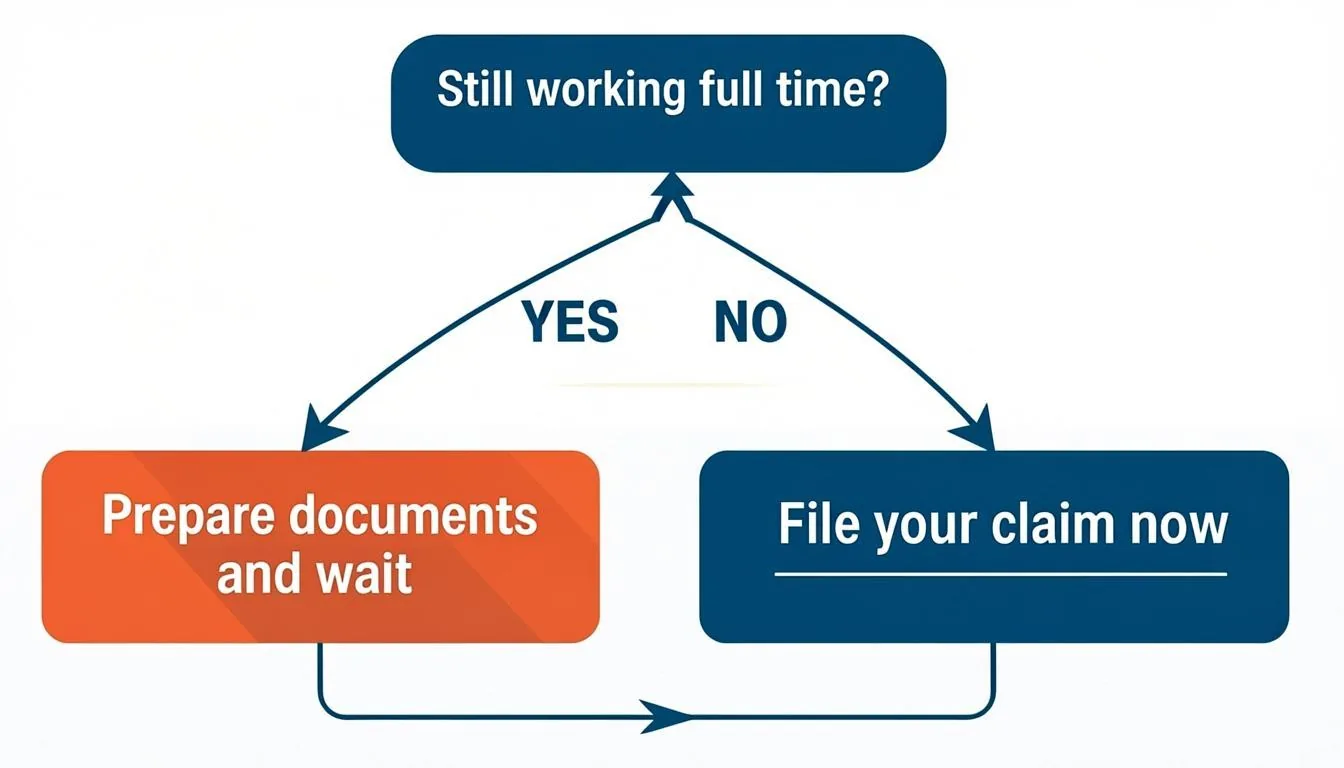
If you are still scheduled for full-time hours, you cannot file yet. New Jersey says this plainly: if you are still employed full time, even if you expect to lose the job, you cannot open a claim. Texas goes a step further and tells workers not to apply until after their last workday.
Once your hours drop, or your final week begins, the picture changes. Most states treat a part-time schedule as partial unemployment, which you can file for right away. New York even instructs claimants to file during their first week of total or partial unemployment.
So the real question is not calendar timing. It is whether you are still working full time on the day you want to file.
How Claim Effective Dates Work
Every unemployment claim has an effective date, and it can never be earlier than the week you file. Texas, for example, sets your effective date as the Sunday of the week in which you apply. The agency cannot pay benefits for weeks before that date.
This is why filing early backfires. A claim submitted two weeks before a layoff does not hold your place or start a countdown clock. It either gets rejected, or it starts a benefit year you did not mean to begin.
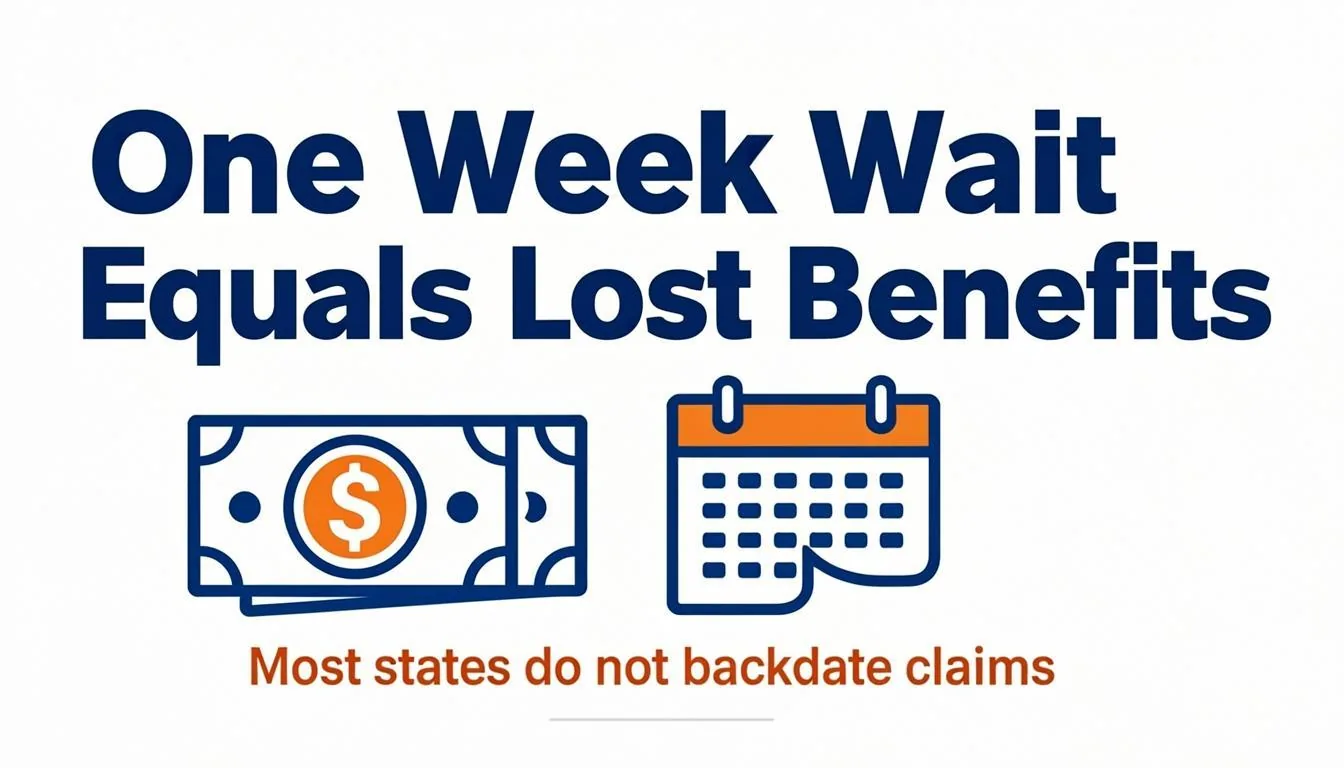
Backdating is rare. Oklahoma's legal aid guidance warns that applications are not made retroactive beyond the week of filing, and most states follow the same policy. A handful, like Massachusetts, give you up to 21 days to request credit for a missed week, but you should never count on that.
When You Can Apply for Unemployment Before Your Last Day of Work
There are three situations where filing before your actual final day is legal and smart. Check which one matches your situation before you wait a single unnecessary week.
Your hours were already cut
Partial unemployment covers workers whose hours dropped below their normal full-time schedule. If your employer reduced you to three or four days a week, you may already qualify in your state. File now, because weeks of reduced wages count while you wait.
You are working your final week
California's EDD advises workers to file right away once they are unemployed or their hours are reduced, and many claimants file during their last week on the payroll. If that final week is short or half unpaid, ask your state agency whether it qualifies as a week of partial unemployment.
Your job has already ended on paper
If your employer handed you a termination letter with a past or same-day effective date, your employment is over even if cleanup tasks remain. The end date on the paperwork is what agencies care about, not the day you return your laptop.
State Filing Windows Compared (2026)
Filing rules vary more than most workers expect, and the wrong assumption can cost a week of benefits. The table below shows how eight large states handle filing timing as of 2026. Always confirm details on your state agency's official site before you file.
| State | When to file | Key timing rule |
|---|---|---|
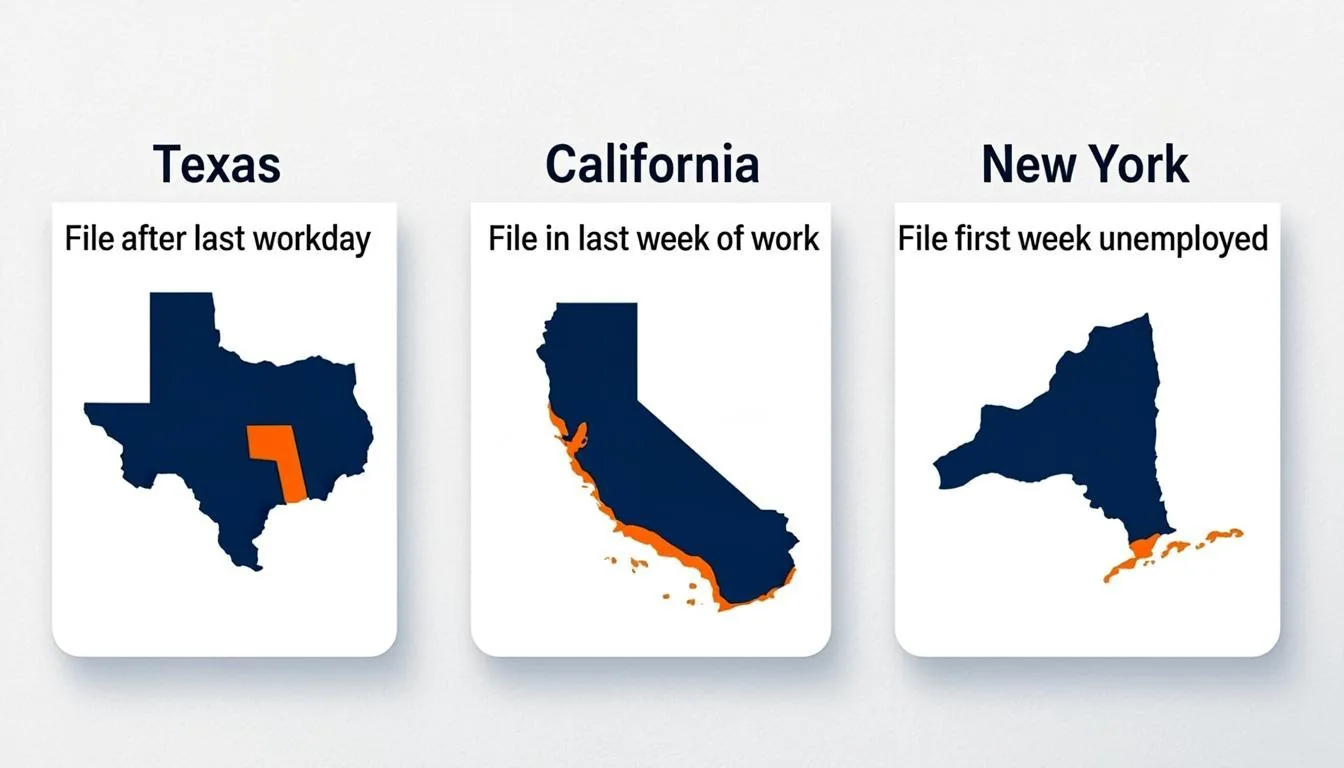
| Texas unemployment calculator | After your last workday | Claim starts the Sunday of the week you apply; no pay for earlier weeks |
| California unemployment calculator | As soon as unemployed or hours reduced | Processing takes about three weeks, so file immediately |
| New York unemployment calculator | First week of total or partial unemployment | Waiting to file can permanently lose benefits |
| Florida | As soon as you become unemployed | Claim is effective the week you file; max benefit is $275 |
| New Jersey | Only after employment ends | Full-time workers cannot file, even with a known layoff date |
| Massachusetts | During the week you are unemployed | Up to 21 days to request credit for a missed week |
| Illinois | Within the week after losing work | The exact filing day does not change your benefits |
| Washington | Same week you become unemployed | The first week of your claim serves as the unpaid waiting week |
Notice the pattern in the first three rows. Texas rewards patience, New York punishes it, and California barely gives you time to think. Your state's exact rule lives on its agency site, and the U.S. Department of Labor maintains links to every state agency at dol.gov.
What Waiting Really Costs You
Waiting feels safe, but it is the most expensive mistake in the filing process. In most states, a week you failed to claim is a week you lose forever, because benefits are not paid retroactively. A one-week delay in a state paying $300 to $600 means hundreds of dollars that never come back.
Delays compound in states with a waiting week. South Carolina, for instance, requires one unpaid week before benefits begin, and Washington applies the waiting week to the week you first file. Stack a late filing on top of a waiting week and your first check arrives three or four weeks after your last paycheck.
The weekly certification clock also matters. Most states require one to three work-search contacts per week, starting immediately. Filing late pushes every subsequent certification and payment date back in step.
How to Prepare Before Your Last Day
Here is the twist most articles miss. You cannot file early, but you can finish 90 percent of the paperwork before your job ends. Claimants who prepare during their final week routinely file within hours of their last shift.
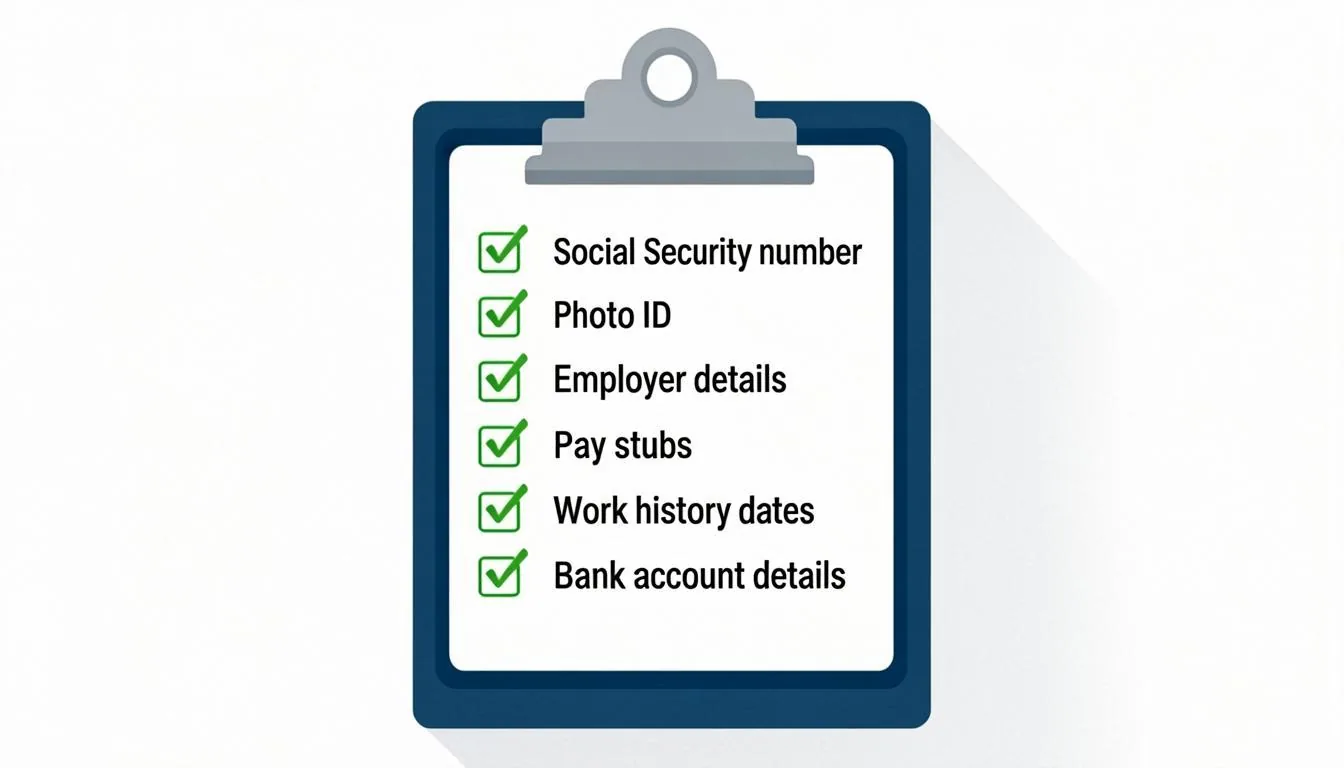
Gather these documents while you still have system access, because requesting them after you leave can take weeks:
- Your Social Security number and a government-issued photo ID
- Employer name, mailing address, and phone number for every employer in the last 18 months
- Employment dates and your reason for separation
- Recent pay stubs covering your base period wages
- Federal Form W-2s or 1099s from the past two years
- Your bank account and routing number for direct deposit
While you gather paperwork, run the numbers. You can estimate your weekly benefit amount with our unemployment benefits calculator in about two minutes, and you can learn how states compute your benefit estimate before you apply. Knowing your expected payment also tells you whether a waiting week is worth fighting over.
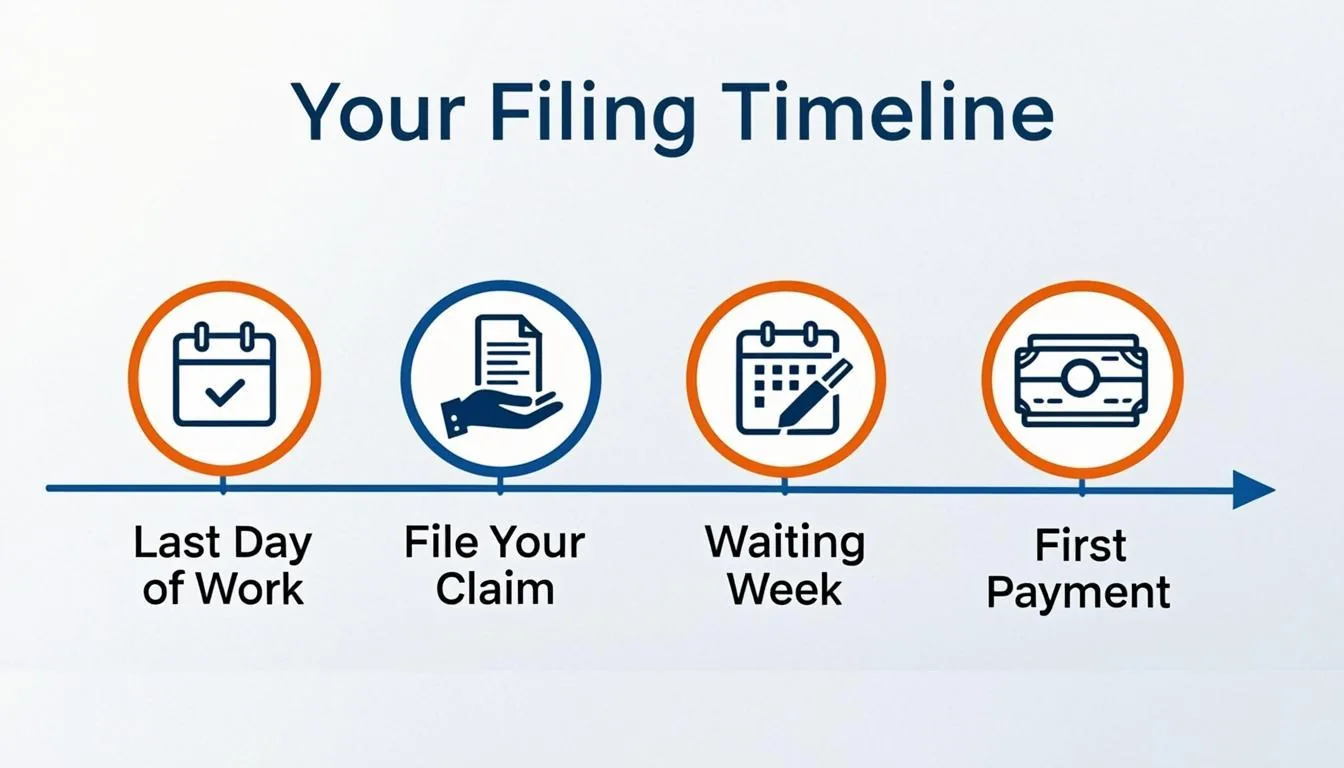
Your Filing Timeline, Step by Step
Once your last day arrives, the process moves fast if you prepared. Follow this sequence and you will usually file within the same week your job ends, which is exactly where your effective date should be.
- Day 0 — your last day of work. Confirm your separation date in writing and note whether you received any final pay, vacation payout, or severance.
- Day 0 to 2 — file the claim. Submit online through your state agency the same week. In Texas, wait until after your final workday; in New York, do not let the first unemployed week pass.
- Week 1 — watch for the determination notice. The agency sends your monetary determination showing your weekly benefit amount and total credits.
- Week 1 onward — certify every week. Answer the weekly questions on time and log your work-search contacts, even while awaiting a decision.
- Weeks 2 to 3 — first payment. Most claimants see payment within two to three weeks of a clean claim. Our guide to first unemployment check timing breaks down every delay point.
Special Situations
Some separations do not follow the standard last-day script. These four come up constantly, and each has its own timing rule.
Working a two-week notice period
If you are working through a notice, you are still employed, so keep working and file after your final shift. If your employer cuts your notice short and ends you immediately, you can file right away. A resignation with good cause follows different eligibility rules, which we cover in our guide to collecting benefits after you quit.
A layoff scheduled weeks from now
Plant closings often give 30 to 90 days of warning. Unless your hours or pay are cut in the meantime, you stay employed until the closing date, and most state agencies will reject an early claim. Use the warning period to complete the document checklist above instead.
Furlough with a return date
Furloughed workers can usually file immediately, because a temporary zero-hour assignment counts as unemployed. Do not wait for the return date to resolve itself. Our guide to unemployment benefits during a furlough explains how pay status affects your weekly claims.
Seasonal or contract work ending
When a contract or season wraps up, your last day of work is the final day on the contract, not the day you run out of saved money. File the following week. Seasonal employees face special between-seasons rules, which we detail in our guide to seasonal worker certification.
Worked Example: A Friday Layoff
Sometimes the clearest way to see the timing is to walk through real dates. In the worker threads I read every week, the Friday-layoff pattern is the single most common scenario, and it trips people up in predictable ways.
Suppose your last scheduled shift is Friday, March 6, 2026, and your employer confirms the date in writing. Here is how the weeks should line up in a typical state with a waiting week and no backdating.
| Date | What happens |
|---|---|
| Fri, Mar 6 | Last day of work. Collect your final pay details and separation notice. |
| Sun, Mar 8 | You file online. In most states your effective date becomes the week of March 8. |
| Week of Mar 8 | This week serves as the waiting week in states that have one. |
| Week of Mar 15 | First payable week, assuming your claim is approved and you certify on time. |
| Late March | First payment arrives, typically two to three weeks after filing. |
Now compare that with waiting. File on March 22 instead, and every row shifts right by two weeks. In a no-backdating state, the weeks of March 8 and 15 are simply forfeited, and a waiting week may claim another one.
One caution on final pay. If you receive severance or vacation payout, report it exactly as your state instructs, because some states offset weekly benefits dollar for dollar. Never delay your filing date because of severance; the reporting rules and the filing rules are separate.
2026 Rules That Affect Your Timing
A few program-wide numbers help you judge what a lost week is actually worth in 2026. Weekly benefits currently range from $235 in Mississippi to $1,033 in Massachusetts, with most states paying between $300 and $600 per week. Standard duration is 26 weeks in most states.
Your benefit amount comes from wages in your base period, the first four of the last five completed calendar quarters. If your recent wages seem missing from your claim, the base period explanation shows why and when an alternate base period applies.
Finally, remember that unemployment income is federally taxable, and most states tax it too. Filing on time keeps your benefit year intact, which matters if you need to reopen a claim later in the year.
The Bottom Line
You generally cannot apply for unemployment before your last day of full-time work, and trying usually ends in a rejected claim. You can often file during a shortened final week, and you should file the week your job ends without fail. Between those two points lies your real window.
Use the waiting time to collect documents and calculate your expected weekly amount with our free unemployment calculator. Then file the moment your employment ends, certify on schedule, and let the effective date work in your favor. That is how you turn a stressful final week into a clean, fast claim.
Frequently Asked Questions
Can I file for unemployment while I still have a job?
In most states you cannot file while you are still working full time, even if a layoff date is already set. If your hours were cut below your normal schedule, you may qualify for partial benefits right away. New Jersey and Texas both tell full-time workers to wait until employment actually ends.
What happens if I wait a week to file my claim?
Most states do not backdate claims, so a week you failed to file is usually lost forever. New York warns that waiting can permanently cost you benefits. Massachusetts is a rare exception, giving claimants up to 21 days to request credit for a missed week.
Should I file on my last day of work or the day after?
Either is safe in most states, as long as you file during the week your job ends. Texas asks claimants to apply after their final workday, and the claim takes effect the Sunday of the week you apply. Filing the same week is what protects your effective date.
Can I apply for unemployment before a scheduled layoff date?
Not while you are still working full time. Most agencies will reject an early claim, and a premature filing can start your benefit year too soon. Use the notice period to gather documents and estimate your benefits instead, then file the week your job ends.
Will severance or vacation pay affect when I should file?
File on schedule and report any severance, vacation payout, or wages in lieu of notice exactly as your state instructs. Some states offset weekly benefits against those payments. The reporting rules are separate from filing rules, so never delay your claim because of severance.
How soon after filing will I get my first payment?
Most claimants receive their first payment within two to three weeks of filing, assuming the claim is clean and certifications are filed on time. States with an unpaid waiting week can add a week. California currently quotes about three weeks for processing.