
You filed your unemployment claim, everything seemed fine, and then you got a notice saying your employer is contesting it. It is a sinking feeling, and honestly, it happens more often than you might think. Employers challenge unemployment claims all the time, and while it can feel personal, it usually is not. Most of the time, it comes down to money. That does not make it any less stressful when your benefits are suddenly on hold, but understanding what is happening and why can take some of the anxiety out of the process.
This guide walks you through every step of what happens when an employer contests your claim. You will learn why employers do it, what reasons they typically give, how the investigation and hearing process works, and most importantly, how to build a strong case so you can get the benefits you deserve. If you are just starting the process, our guide on how to file your claim covers the basics of getting started.
Why Employers Contest Unemployment Claims
Here is the thing most people do not realize: when you collect unemployment, it is not the government paying your benefits out of some giant pot of taxpayer money. Unemployment insurance is funded by employer payroll taxes, and those tax rates are experience-rated. That means the more former employees who successfully claim benefits against a company, the higher that company's unemployment insurance tax rate goes. In states like Michigan and Pennsylvania, a business with a long history of claims could pay several times more per employee than a company with hardly any claims.
So when you file a claim, your employer gets a notice from the state. They have a window of time, usually 7 to 14 days depending on the state, to respond. If they do nothing, your claim moves forward. But if they respond with a protest, it triggers an investigation. The financial incentive to contest is real. Even one successful claim can bump an employer into a higher tax bracket for years. A company with 50 employees might pay an extra $15,000 or more annually in unemployment taxes because of a single contested claim that went against them.
Some employers contest almost every claim as a matter of policy. Others are more selective and only protest when they genuinely believe the termination was for cause. Third-party companies called TPA firms, or Third Party Administrators, actually handle unemployment protests as a service for employers. They specialize in fighting claims and know the system inside and out. So when it feels like your employer brought a lawyer to a knife fight, that might literally be what is happening. Understanding your eligibility requirements going in can help you hold your ground.
Common Reasons Employers Give for Contesting
Employers typically rely on a handful of well-worn arguments when they contest a claim. The most common one is misconduct. They will say you were fired for violating company policy, insubordination, excessive absenteeism, or some other behavior that disqualifies you from benefits. Misconduct is a legal term with a specific meaning in unemployment law, and it requires more than just poor performance or a mistake. It generally means a willful or deliberate violation of the employer's rules. If you want to understand what counts and what does not, our guide on disqualifying factors goes into detail.
The second big reason is that you quit voluntarily. If your employer tells the state that you resigned, that creates a presumption that you are not eligible. But there are exceptions. If you quit for good cause, like a hostile work environment, significant pay cuts, unsafe conditions, or a spouse relocating for military orders, you can still qualify. The bar is high though, and you will need evidence to back it up. Our article on whether you can get benefits if you quit your job covers the exceptions that work in each state.
A third reason employers use is that you were still employed, or that there was available work you refused. Sometimes employers claim you were on a leave of absence rather than terminated, or that you walked away from ongoing work. Less commonly, employers might argue that you were an independent contractor rather than an employee, which would mean you were not covered by unemployment insurance at all. Each of these arguments has specific legal standards, and the state adjudicator will evaluate whether the employer's claim holds up under scrutiny.
What Happens After Your Employer Files a Protest
When your employer contests your claim, you will receive a notice from your state unemployment agency. This notice typically arrives by mail, though many states now also send it electronically through your online account. The notice will tell you that your employer has filed a protest, and it will include the reason they gave. Do not ignore this notice. It will contain important deadlines and instructions for how to respond.
At this point, the state begins what is called a fact-finding investigation. A claims examiner or adjudicator reviews the information from both sides. They may contact you by phone to get your side of the story. They may also contact your employer for additional details or documentation. This initial investigation usually takes two to four weeks, though it can drag on longer in busy states like California or New York. During this time, some states will still pay your benefits while the investigation is pending, while others will hold your payments until a determination is made. It depends on the state and the type of protest.
After the fact-finding is complete, the adjudicator issues a written determination. If the determination is in your favor, your benefits continue, or start, and your employer can appeal that decision. If the determination goes against you, your benefits are denied, and you have the right to appeal. Either way, this initial determination is not the final word. Both you and your employer have appeal rights, and many cases ultimately get resolved at a formal hearing. If you are wondering what to expect in the early days, our guide on after you file covers the full timeline.
Employer Protest vs. Formal Hearing
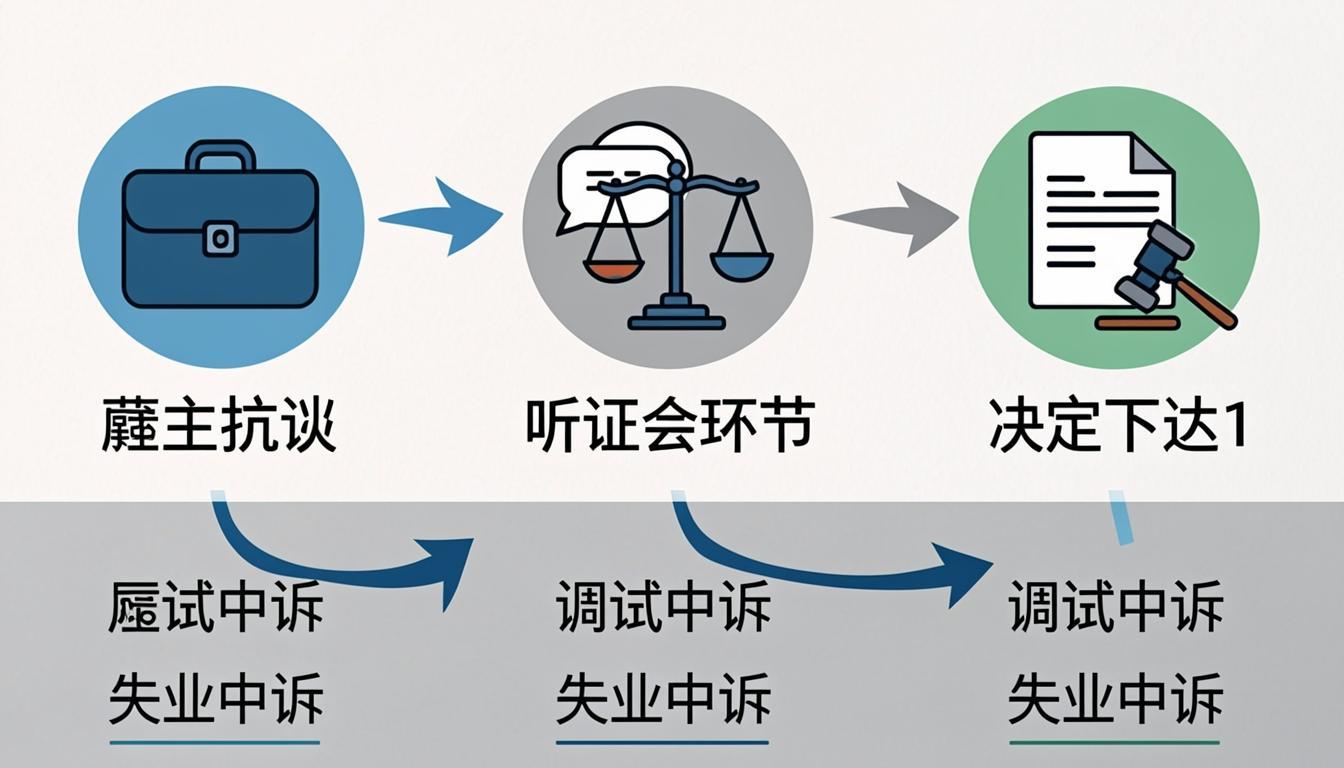
There is an important distinction between an employer filing a protest and an actual hearing. A protest is just the employer saying they disagree with your claim. It is a written objection that triggers the fact-finding process. Most of the time, the initial determination is made based on written statements and phone interviews without any kind of formal proceeding. You might never even speak to your employer during this phase.
A formal hearing is different. It happens when someone appeals the initial determination. If your employer protests and the adjudicator rules in your favor, your employer might appeal, which triggers a hearing. If the adjudicator rules against you, you appeal, and that also triggers a hearing. The hearing is a more formal process, usually conducted by an administrative law judge over the phone, though some states hold them in person. Both sides present evidence, call witnesses, and make arguments. The judge can ask questions of anyone involved. It is more like a mini trial than a simple review of paperwork.
The key takeaway is this: an employer protest is just the opening move. It does not mean you lose. It just means the state needs to look more closely at the circumstances of your separation. Many workers win at the initial determination stage, and many more win at the hearing level. The system is designed to give both sides a fair shake. If you received an unfavorable initial determination, our guide on how to appeal the denial walks you through every step of the appeals process.
How to Prepare Your Case
Preparation is everything when your employer contests your claim. The more organized you are, the better your chances. Start by gathering every document related to your employment and separation. That includes your hire letter, employee handbook, performance reviews, written warnings, emails with your manager, termination letter, and any severance agreement. Even text messages can be useful if they show the actual reason you were let go or that your employer said something different at the time than what they are claiming now.
Write down a detailed timeline of events while your memory is fresh. Include dates, times, who said what, and any actions taken. The more specific you can be, the more credible your account will sound. Vague statements like “my boss was always on my case” do not carry nearly as much weight as “on March 14, my supervisor told me my position was being eliminated due to budget cuts, and I received my termination letter dated March 15 confirming this.” Specificity wins hearings.
Think about witnesses too. Former coworkers who can corroborate your version of events are extremely valuable. Maybe a colleague saw the conversation where you were told you were being laid off, or a coworker can testify about the unsafe conditions that led you to quit. Witnesses do not need to be dramatic. They just need to confirm facts. Also, if you had any communication with HR about issues at the company, dig up those emails. HR departments often have a paper trail that supports the worker's version of events, even if the employer is now telling a different story.
Evidence That Helps You Win
Not all evidence is created equal. The most persuasive evidence is documentary evidence, things in writing that tell an objective story. Termination letters are gold. If your employer gave you a written reason for termination at the time, and that reason does not match what they are telling the unemployment office now, that inconsistency can sink their case. For example, if your termination letter says you were laid off due to restructuring, but your employer now claims you were fired for misconduct, the judge will want to know why the story changed.
Performance reviews are another strong piece of evidence. If you were supposedly fired for poor performance, but your reviews were consistently satisfactory or better, that creates a real problem for the employer's argument. Email chains that show you were a reliable employee, or that document the actual circumstances of your departure, can be very persuasive. Even a pattern of being denied promotions or raises can be relevant if it shows the employer's claims are inconsistent with how they actually treated you.
Witness statements carry weight too, especially from people who do not have a stake in the outcome. A former coworker who left the company voluntarily and can speak to what they observed is more credible than your best friend. Medical documentation matters if your case involves health-related absences or a hostile work environment that caused stress. If you were fired from your job and the employer claims misconduct, any evidence showing you followed company policy or that the policy was unclear or inconsistently enforced is extremely helpful.
What Happens at the Hearing
If your case goes to a hearing, it will typically be held over the phone, though some states like Ohio and Wisconsin still do in-person hearings at local offices. The hearing is conducted by an administrative law judge, sometimes called a referee or appeals examiner depending on the state. Their job is to review the facts, listen to both sides, and make a decision based on unemployment law.
You and your employer will both participate, along with any witnesses. Your employer will probably be represented by someone from HR or a TPA representative. They will present their version of events and may submit documents as evidence. Then you get to present your side. The judge will ask questions of both parties, and you will have the chance to cross-examine your employer's witnesses and vice versa. Do not let the cross-examination part intimidate you. It just means you can ask the employer's witnesses questions about their testimony. Keep your questions simple and focused on facts.
The burden of proof is crucial to understand. If you were fired, the employer bears the burden of proving that you committed misconduct. That means they have to show evidence, not just make accusations. If you quit, you bear the burden of proving you had good cause. This is a meaningful distinction. In a misconduct case, if the employer's evidence is weak or contradictory, you win by default because they failed to meet their burden. Make sure you understand which side carries the burden in your situation, because it shapes your entire strategy.
During the hearing, be respectful and stick to the facts. Do not interrupt the judge or the other side, even if what they are saying is wrong. You will get your turn to respond. Answer questions directly and briefly. Going off on tangents or getting emotional hurts your case more than it helps. Judges appreciate claimants who are calm, organized, and focused on the relevant facts. After both sides have presented their case, the judge typically issues a written decision within one to three weeks.
Possible Outcomes and Next Steps
After the hearing, the judge will issue a decision in writing. There are three possible outcomes. The judge could affirm the original determination, meaning whatever was decided at the fact-finding stage stands. They could reverse the determination in your favor, which means your benefits are approved. Or they could modify the determination, which might mean you qualify for benefits but with some conditions or a reduced amount.
If you win, you will typically receive all back benefits for the weeks you were eligible but not paid, plus ongoing benefits as long as you continue to meet the weekly certification requirements. Those back benefits can be substantial if your case took months to resolve. In states that pay benefits during the investigation, you will have already been receiving them. In states that withhold benefits during a contested period, you will get a lump sum.
If you lose, you have another level of appeal available in most states. This is usually an appeal to a board of review or the state court system. The standard is higher at this level. The board generally does not reconsider facts, only whether the hearing was conducted properly and the law was applied correctly. It is an uphill battle, but some workers succeed at this stage when there were legal errors at the hearing level. You can also refile a new claim in many cases if your circumstances change, such as finding and losing subsequent employment. While you are waiting for a resolution, you can check claim status online to stay on top of any updates.
What If Your Employer Lies
It happens more than anyone wants to admit. An employer tells the unemployment office that you were fired for misconduct when you were actually laid off, or claims you quit when you were really pushed out. Some employers will exaggerate the severity of policy violations or fabricate incidents that never occurred. If you believe your employer is providing false information, do not panic, but do take it seriously.
The best defense is documentation. If your employer claims you were written up three times for attendance, but you never received any written warnings, say so clearly and ask the judge to require the employer to produce those documents. If they cannot produce them, their credibility takes a major hit. Similarly, if your employer says you were fired for insubordination but your termination letter says something completely different, that inconsistency is powerful evidence in your favor. Judges see employer dishonesty all the time, and they are generally good at spotting it.
You can also request records from your employer through the hearing process. Most states allow you to subpoena documents or require the employer to produce evidence. If you suspect your employer is lying, request that they produce all documentation related to the incidents they are describing. In many cases, the documentation either does not exist or tells a different story than what the employer is claiming. Do not be afraid to challenge your employer's version of events directly. That is what the hearing is for. If the employer provides false information to the state intentionally, that can also have consequences for them. Be aware though, that providing false information on your own claim carries serious fraud penalties, so always be truthful in your own statements.
Frequently Asked Questions
Can I still receive benefits while my employer's contest is being reviewed?
It depends on your state. Some states, like Florida and North Carolina, will pay benefits while the investigation is pending and then seek repayment if the determination goes against you. Other states withhold benefits until the matter is resolved. If your state withholds benefits and the determination ultimately favors you, you will receive all back payments for the weeks you were eligible. This is why it is important to keep certifying for benefits every week even while the contest is pending, assuming your state allows it. Missing certifications can mean missing out on back pay. The certification questions you answer each week remain the same regardless of the contest status.
Do I need a lawyer for the unemployment hearing?
You are not required to have legal representation at an unemployment hearing, and many workers handle it successfully on their own. That said, if your case is complicated, involves large amounts of back pay, or your employer is represented by a TPA or attorney, having legal help can make a real difference. Some states offer free legal aid for unemployment appeals through legal services organizations. There are also employment attorneys who handle these cases on a contingency basis, meaning they only get paid if you win. If you are comfortable speaking clearly about the facts and have your evidence organized, you can absolutely represent yourself effectively.
What if my employer does not show up to the hearing?
If your employer fails to participate in the hearing, that generally works in your favor. The judge will typically proceed without them and base the decision on the evidence available, which in their absence means mostly your evidence. In most states, if the employer does not appear, their protest is essentially abandoned and the decision defaults to the claimant. However, some states allow the employer to request a reopening if they had a legitimate reason for missing the hearing, so it is not always a guaranteed win. Either way, an employer no-show puts you in a much stronger position. Make sure you still present your case thoroughly even if they are not on the call, because the judge needs a factual basis to rule in your favor.
Disclaimer:This article provides general information about the unemployment claim contest process. Hearing procedures, benefit payment rules during investigations, and appeal timelines vary significantly by state. Always verify current rules with your state's unemployment agency, and consider seeking legal advice if your case involves complex facts or large benefit amounts.