The Short Answer: It Depends
Caring for a sick parent, a disabled spouse, or an ailing child is one of the hardest jobs you will ever take on. It is also one of the most financially stressful. If you lost your paying job and now spend your days looking after a family member, you are probably wondering whether unemployment insurance can help bridge the gap.
The honest answer is: maybe. Unemployment benefits are not designed for caregivers, and the rules are not always in your favor. But they are not automatically off the table either. Much depends on whether you can prove you are available for work and actively seeking a job — two requirements that caregiving can make very hard to satisfy.
This article walks through the key issues, the state-by-state differences, and the strategies that have helped some caregivers successfully claim UI benefits.
Why Caregiving and Unemployment Benefits Clash
Unemployment insurance exists for people who are out of work through no fault of their own and who are ready, willing, and able to accept suitable employment. That "ready, willing, and able" part is where caregivers run into trouble.
If you are providing full-time care for a family member — helping them bathe, eat, get to medical appointments, or managing their medications — you may genuinely not be free to take a job that starts next week. The unemployment office sees that as a problem.
Your state's unemployment agency will ask some version of this question every week when you certify for unemployment benefits: Were you able and available to work each day? If the honest answer is no because of caregiving duties, your claim could be reduced or denied entirely.
The Availability Requirement Explained
Every state requires claimants to be "available for work." That means you must be ready to accept a suitable job offer if one comes your way, and you must be able to work the hours that are normal for your occupation and local labor market.

If you tell the unemployment office you can only work between 10 PM and 6 AM because you need to care for your mother during the day, some states will say that restriction makes you not available. Others may accept limited availability depending on the local job market and the type of work you normally do.
This is not a theoretical concern. States routinely deny benefits to people whose caregiving obligations restrict their work availability. But the outcome varies enough that you should never assume you will be denied without at least applying.
Can You Work Part-Time and Still Collect?
One workaround that works for many caregivers is part-time employment. If you can work reduced hours — say, 20 hours a week while a home health aide covers the rest — you might qualify for partial unemployment benefits.
Most states let you work part-time and still get unemployment, as long as your earnings do not exceed a certain percentage of your weekly benefit amount. Typically, you can earn up to about 25-50% of your weekly benefit before your payment starts getting reduced, and many states now let you keep some benefit even with higher earnings.
This is often the most realistic path for caregivers. You keep some income flowing, maintain your connection to the workforce, and continue qualifying for UI benefits. The trade-off is that you need to actually find and keep that part-time work.
What If You Quit Your Job to Become a Caregiver?
This is one of the most common questions people ask, and the answer is usually disappointing. If you voluntarily quit your job to take care of a family member, you will face an uphill battle getting unemployment benefits.
States generally require that you lost your job through no fault of your own. Quitting, even for a deeply personal and understandable reason like caregiving, is considered a voluntary separation. That puts the burden on you to prove you had "good cause" to quit.
Some states recognize limited exceptions. If your employer made it impossible for you to keep working — say, they refused a reasonable accommodation like flexible scheduling or leave under the Family and Medical Leave Act — you might have a case. But you need documentation and a clear timeline. Learn more about when you can get unemployment if you quit and what evidence you need.
Constructive Discharge: A Narrow Exception
In rare cases, a caregiver's situation is so dire that quitting amounts to "constructive discharge" — the legal idea that working conditions were so intolerable that a reasonable person would have quit. If your employer forced you out by denying legally required leave or creating impossible scheduling conflicts, you might qualify under this theory.
But constructive discharge claims are hard to win. You need to show that you tried to resolve the problem with your employer first, that you gave them a chance to accommodate your caregiving needs, and that they refused. If you simply walked out one day without raising the issue, your chances are slim.
State-by-State Differences That Matter
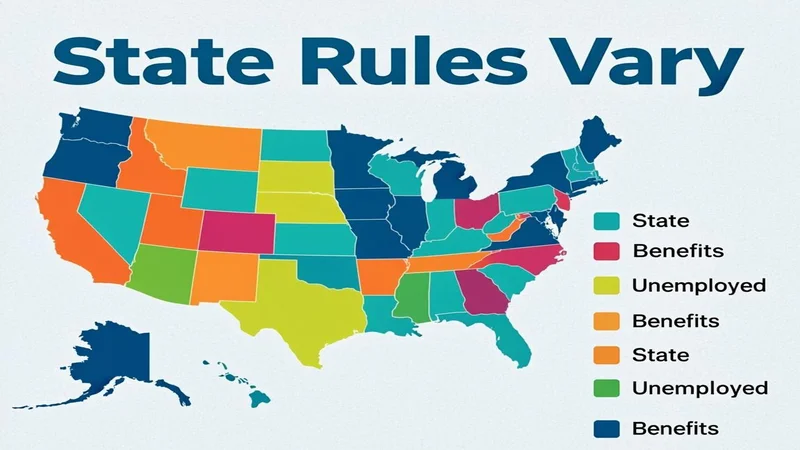
Unemployment is a federal-state partnership, which means every state writes its own rules about availability and suitable work. The differences are significant enough that the same caregiver might qualify in one state and be denied in another.
Here are some of the key variations:
- Definition of "available": Some states require full-time availability. Others accept part-time availability if it matches your recent work history.
- Restrictions on work hours: A few states are lenient about shift restrictions tied to caregiving. Most treat any significant restriction as a disqualifying factor.
- Good cause for quitting: States like California have broader definitions of good cause that can include compelling family circumstances. States like Florida and North Carolina are much stricter.
- Partial benefit rules: The amount you can earn while collecting partial benefits varies significantly. Check your state's rules or look at the maximum unemployment benefits by state to understand the range.
If you live in a state with more flexible rules, your odds improve. But even in strict states, you should apply and let the agency make a formal determination rather than disqualifying yourself.
The Job Search Challenge for Caregivers
Every state requires you to actively search for work while collecting unemployment. That means submitting applications, attending interviews, and documenting your efforts. For someone spending 40+ hours a week on caregiving, meeting these job search requirements can feel overwhelming.
But you cannot skip them. If you fail to document your job search activities, your benefits will stop. The unemployment office does not grant exemptions for caregivers.
The practical advice: set a realistic schedule. Even three to five well-documented job search activities per week may satisfy your state's requirements. Focus on applications you can complete online during quiet moments. Keep a meticulous log of everything you do — dates, employer names, positions, and outcomes.
What Counts as a Job Search Activity?
Most states accept a range of activities, not just submitting applications. You might count attending a virtual job fair, meeting with a career counselor, updating your resume, or taking a skills assessment test. Some states also count networking activities.
Be sure you understand exactly what your state requires. The rules are not the same everywhere, and doing the wrong type of activity — or not doing enough of the right ones — can cost you your benefits.
When Caregiving Overlaps with Disability
If the family member you care for receives disability benefits, or if you yourself have a disability that limits your ability to work, the situation gets more complex. Some people try to claim both unemployment and disability benefits simultaneously, but that almost never works.
The core conflict is simple: unemployment requires you to say you are able to work, while disability requires you to say you cannot. You generally cannot be both available for full-time work and unable to work due to disability at the same time.
There are narrow exceptions. If you have a partial disability that allows you to do some types of work but not others, you might qualify for unemployment with restrictions. But expect heavy scrutiny from the unemployment agency. Read more about whether you can get unemployment while on disability to understand the overlap.
Practical Strategies for Caregivers Seeking UI Benefits
If you are a caregiver who has recently lost a job, here are steps that can improve your chances of qualifying for unemployment:
- Apply anyway. Do not self-disqualify. Let the state agency evaluate your claim and make a formal decision. Many people assume they will be denied and never apply, leaving money on the table.
- Document your availability. Keep a calendar showing the hours you are free to work. If you can demonstrate specific windows of availability, some adjudicators will find you meet the requirement.
- Pursue part-time work aggressively. Even a part-time job that pays less than your weekly benefit amount can help you qualify for partial benefits while maintaining your caregiving role.
- Keep your job search log current. Never let a week go by without documenting your search activities. This is the easiest requirement to meet and the most common reason people lose benefits.
- Explore alternative care arrangements. If you can arrange even intermittent respite care — through family, community programs, or Medicaid waiver services — it expands the hours you can truthfully say you are available for work.
What If Your Claim Gets Denied?
Denials are common for caregivers, but they are not always final. You have the right to appeal, and many appeals succeed when the claimant can provide better documentation of their availability and job search efforts.
The appeal process varies by state but typically involves a hearing before an administrative law judge. This is your chance to explain your situation in detail — something the initial computerized determination does not allow for.
Bring evidence: your job search log, documentation of care arrangements that free you to work, your work history, and any correspondence with your employer. If you appeal an unemployment denial, be prepared to explain why your caregiving responsibilities do not prevent you from accepting suitable work.
Other Programs That Might Help
Unemployment benefits are not the only option, and for some caregivers they may not be the best one. Consider these alternatives:
- Family and Medical Leave Act (FMLA): If your employer has 50+ employees and you have been there at least a year, FMLA gives you 12 weeks of unpaid, job-protected leave. It does not pay you, but it protects your job.
- Paid family leave: A growing number of states — including California, New York, New Jersey, Washington, Massachusetts, Connecticut, Oregon, and Colorado — offer paid family leave programs that partially replace your income while you care for a seriously ill family member.
- Medicaid caregiver programs: Some states let family caregivers get paid through Medicaid for providing care to eligible recipients. The rules are complex, but the income can be meaningful.
- Supplemental Security Income (SSI): If the person you care for qualifies, their SSI payment can help cover household expenses. Learn about whether you can collect unemployment and social security at the same time.
Paid family leave is probably the most underused resource for caregivers in states that offer it. If you live in one of those states, look into it before or alongside an unemployment claim. The eligibility rules are often more caregiver-friendly than UI rules.
The Bottom Line
Getting unemployment benefits as a caregiver is not easy, but it is not impossible either. The key question is always whether you can honestly say you are available for work. If caregiving completely dominates your schedule and leaves you unable to accept a job, UI benefits will likely be out of reach.
But if you can carve out enough availability — through part-time work, respite care, or support from other family members — you may qualify for at least partial benefits. The worst thing you can do is assume you will be denied and not apply at all.
File your claim, document everything, and if you get denied, consider appealing. The system is not designed with caregivers in mind, but that does not mean it has nothing to offer you.