
When people think about unemployment benefits, they usually focus on the maximum — how much they could get at the top end. But for millions of low-wage workers, part-time employees, and people who had irregular earnings, the more relevant question is the minimum. What is the smallest unemployment check you can receive, and is it even worth filing if your benefit is going to be tiny? The answer depends on your state, because minimum benefit amounts vary dramatically — from as little as $5 per week in some states to over $200 per week in others. Understanding the minimum benefit in your state is important because it tells you the floor of what you can expect, and it helps you decide whether filing for unemployment is worth the effort.
The minimum benefit is not just a number — it is a reflection of how seriously your state takes its obligation to support low-wage workers. A state with a high minimum benefit signals that even workers with very modest earnings deserve a meaningful safety net. A state with a very low minimum is effectively telling low-wage workers that the unemployment system is not designed for them, because a benefit of $5 or $10 per week is not enough to make any practical difference in a person's budget. This guide covers the minimum benefit for every state, explains how minimums are calculated, and discusses what to do if your benefit is at or near the minimum. If you are new to the unemployment process, our eligibility guide covers the basic requirements.
How Minimum Benefits Are Determined
The minimum benefit is not a fixed dollar amount that a state simply chooses. It is a product of the same formula that determines the maximum benefit, applied to the lowest level of earnings that qualifies for benefits. When your state calculates your Weekly Benefit Amount, it applies the formula to your high quarter earnings and then checks the result against the minimum and maximum thresholds. If your calculated benefit is below the minimum, you receive the minimum. If it is above the maximum, you receive the maximum. Most workers fall somewhere in between, but low-wage workers and those with limited earnings history are more likely to hit the minimum floor.
Some states set their minimum as a fixed dollar amount — for example, $40 per week regardless of how little you earned. Other states set it as a percentage of the maximum benefit, which means the minimum increases automatically when the maximum is adjusted. A few states do not have a formal minimum at all, which means that even a worker with very low earnings will receive whatever the formula produces, even if it is only a few dollars. The practical effect of a very low minimum is that some workers may not qualify for benefits at all, because the minimum earnings threshold to establish a claim is higher than what they earned. For more on how benefits are calculated, see our benefit formula guide.
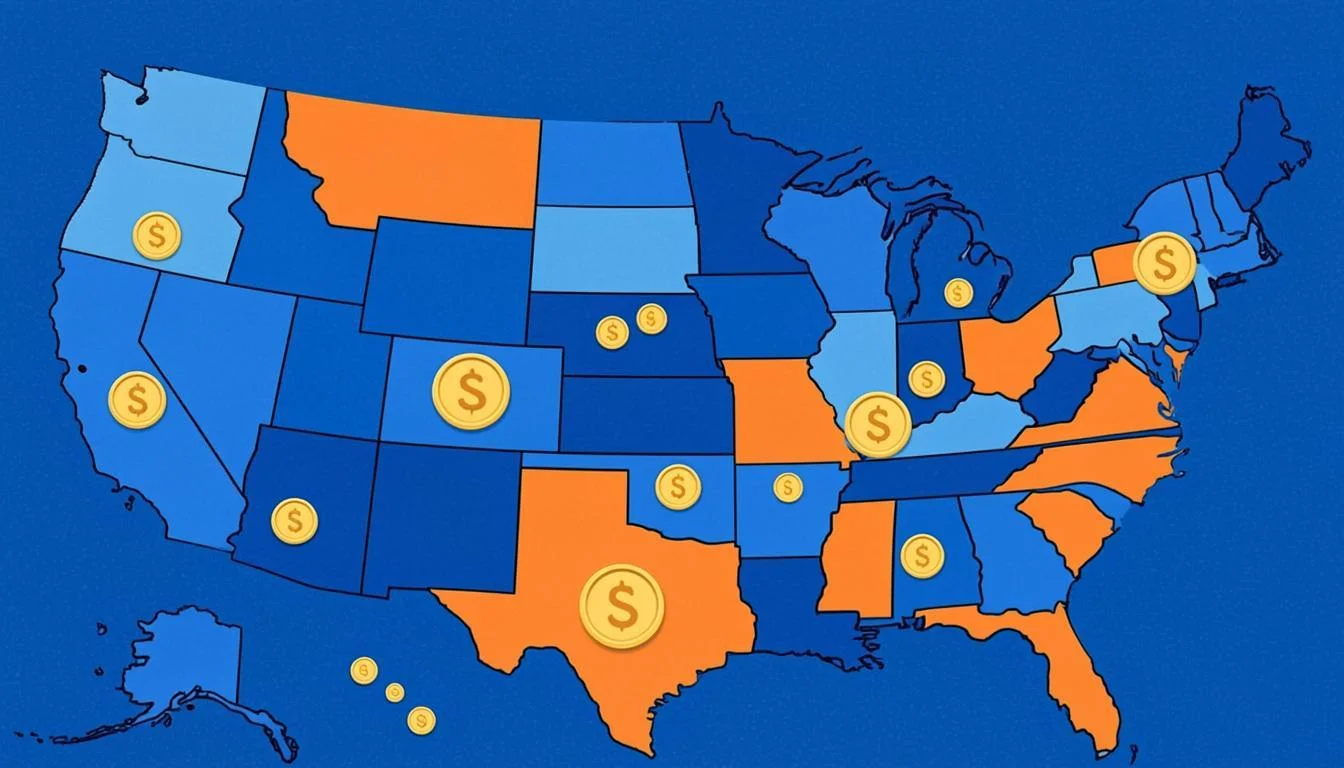
Minimum Benefit by State: Complete Reference Table
The following table shows the minimum weekly benefit amount for every state. This is the least you can receive if you qualify for benefits, regardless of how low your earnings were. Use this table to understand the floor of what you can expect and to compare your state's minimum with the national average.
| State | Min WBA | Max WBA | Min Earnings to Qualify |
|---|---|---|---|
| Alabama | $45 | $275 | $1,200+ in high quarter |
| Alaska | $56 | $442 | $1,400+ in high quarter |
| Arizona | $40 | $320 | $960+ in high quarter |
| Arkansas | $36 | $451 | $780+ in high quarter |
| California | $40 | $580 | $1,300+ in high quarter |
| Colorado | $25 | $719 | $2,500+ in base period |
| Connecticut | $15 | $724 | $600+ in high quarter |
| Delaware | $20 | $442 | $1,040+ in high quarter |
| Florida | $32 | $275 | $3,400+ in base period |
| Georgia | $44 | $410 | $1,140+ in high quarter |
| Hawaii | $5 | $696 | $130+ in high quarter |
| Idaho | $72 | $490 | $1,872+ in high quarter |
| Illinois | $51 | $534 | $1,326+ in high quarter |
| Indiana | $50 | $390 | $1,300+ in high quarter |
| Iowa | $43 | $571 | $1,120+ in high quarter |
| Kansas | $37 | $494 | $960+ in high quarter |
| Kentucky | $39 | $596 | $1,014+ in high quarter |
| Louisiana | $10 | $284 | $260+ in high quarter |
| Maine | $29 | $534 | $754+ in high quarter |
| Maryland | $25 | $430 | $650+ in high quarter |
| Massachusetts | $25 | $1,028 | $650+ in high quarter |
| Michigan | $81 | $362 | $2,106+ in high quarter |
| Minnesota | $29 | $846 | $754+ in high quarter |
| Mississippi | $30 | $235 | $780+ in high quarter |
| Missouri | $35 | $320 | $910+ in high quarter |
| Montana | $31 | $546 | $806+ in high quarter |
| Nebraska | $36 | $466 | $936+ in high quarter |
| Nevada | $16 | $516 | $416+ in high quarter |
| New Hampshire | $32 | $546 | $832+ in high quarter |
| New Jersey | $60 | $804 | $1,560+ in high quarter |
| New Mexico | $21 | $314 | $546+ in high quarter |
| New York | $40 | $527 | $1,040+ in high quarter |
| North Carolina | $15 | $350 | $390+ in high quarter |
| North Dakota | $43 | $534 | $1,120+ in high quarter |
| Ohio | $134 | $680 | $3,480+ in high quarter |
| Oklahoma | $16 | $362 | $416+ in high quarter |
| Oregon | $151 | $765 | $3,926+ in high quarter |
| Pennsylvania | $35 | $615 | $910+ in high quarter |
| Rhode Island | $18 | $756 | $468+ in high quarter |
| South Carolina | $42 | $326 | $1,092+ in high quarter |
| South Dakota | $28 | $428 | $728+ in high quarter |
| Tennessee | N/A | N/A | N/A (no state UI) |
| Texas | $69 | $580 | $1,794+ in high quarter |
| Utah | $22 | $580 | $572+ in high quarter |
| Vermont | $22 | $598 | $572+ in high quarter |
| Virginia | $60 | $510 | $1,560+ in high quarter |
| Washington | $295 | $1,019 | $7,670+ in high quarter |
| West Virginia | $24 | $424 | $624+ in high quarter |
| Wisconsin | $54 | $470 | $1,404+ in high quarter |
| Wyoming | $31 | $530 | $806+ in high quarter |
States with the Highest and Lowest Minimums
The gap between the highest and lowest minimum benefits is staggering. Washington state sets the bar at $295 per week, which is nearly 60 times higher than Hawaii's $5 minimum. This means that a low-wage worker in Washington receives a benefit that is genuinely useful for covering basic expenses, while a similarly situated worker in Hawaii receives a check that barely covers the cost of a single meal. The disparity reflects fundamentally different philosophies about the role of unemployment insurance. Washington treats it as a meaningful wage replacement program, while Hawaii and other low-minimum states treat it as a token payment that acknowledges eligibility without providing substantial support.
Oregon and Ohio also stand out with high minimums of $151 and $134 respectively, both well above the national average. These states have made a deliberate policy choice to ensure that even their lowest-earning workers receive a benefit that can make a real difference in their monthly budget. On the other end, states like Louisiana ($10), Hawaii ($5), and North Carolina ($15) have minimums so low that many workers may question whether filing is worth the effort. The answer is almost always yes, because even a small benefit establishes your claim and protects your eligibility for any extensions or supplemental programs that may become available. For more on how to estimate your benefits before filing, see our estimation guide.
What to Do If Your Benefit Is at the Minimum
If your calculated benefit falls at or near your state's minimum, there are several things you should consider. First, verify that your benefit is calculated correctly. It is possible that your employer's wage report was incomplete or inaccurate, and if you can provide documentation of higher earnings, your benefit may be adjusted upward. Request a copy of your wage transcript from the unemployment agency and compare it with your own records. If there is a discrepancy, file an appeal within the deadline. For help with the appeals process, see our appeal guide.
Second, check whether you qualify for a dependents allowance. Some states add extra money to your weekly benefit if you have dependent children or a non-working spouse. This can increase your benefit by $25 to $50 per dependent, which is a significant boost when your base benefit is at the minimum. For more on this, see our dependents allowance guide. Third, consider whether part-time work is an option. In states with a 50% reduction formula, you can earn additional income while still receiving a partial benefit, which can significantly increase your total weekly income.

Why Minimum Benefits Matter for Low-Wage Workers
The minimum benefit is not just a technical detail — it is a critical issue for the millions of workers who earn at or near the minimum wage. These workers are often the most vulnerable during unemployment, with the least savings and the fewest resources to fall back on. A minimum benefit of $5 or $10 per week is not a meaningful safety net; it is a token payment that does not come close to covering basic living expenses. By contrast, a minimum benefit of $100 or more can help a low-wage worker keep the lights on, buy groceries, and avoid falling into poverty while searching for a new job.
If you are a low-wage worker considering filing for unemployment, do not let a low minimum benefit discourage you from filing. Even a small benefit is better than nothing, and filing establishes your claim in the system, which protects your eligibility for any future extensions or supplemental programs. Additionally, some states have special provisions for low-wage workers, such as extended benefit durations or reduced job search requirements. Check with your state's unemployment agency for details. For a comprehensive overview of how long you can collect benefits, see our benefit duration guide.
How Minimum Benefits Are Adjusted Over Time
Most states adjust their minimum and maximum benefit amounts periodically, typically annually. The adjustments are usually based on the state's average weekly wage, which tends to increase over time. When the average wage goes up, the maximum benefit increases, and the minimum may increase as well. However, the minimum does not always increase proportionally with the maximum, which means that the gap between the minimum and maximum can widen over time. This is a policy choice — states that prioritize supporting low-wage workers will increase the minimum more aggressively, while states that focus on the maximum may let the minimum stagnate.
The timing of these adjustments varies by state. Some states adjust annually on a fixed date, such as July 1 or January 1. Others adjust based on the fiscal year or the calendar year of the claim. If you are filing near the date of an adjustment, it may be worth checking whether the new minimum will be higher than the current one, which could increase your benefit. For the most current minimum and maximum benefit amounts, check your state's unemployment website or refer to our maximum benefits guide.
Key Takeaways
Disclaimer:This article provides general information about minimum unemployment benefit amounts. Rules and regulations vary by state and are subject to change. Always verify current rules with your state's unemployment agency. If you need personalized advice, consult a qualified legal or financial professional.