
Having a criminal record can make nearly every part of life harder — finding housing, getting a job, and yes, even applying for unemployment benefits. Many people who have served time or faced felony charges assume they are automatically disqualified from receiving unemployment, but the reality is more complicated than that. The truth is that a criminal record alone does not necessarily bar you from collecting unemployment benefits, though the circumstances of your conviction and the reason you lost your job certainly matter.
In this guide, we will walk through exactly how a criminal record affects your unemployment eligibility, what the law says in different states, and practical steps you can take to improve your chances of a successful claim. Whether you have a misdemeanor, a felony, or an expunged record, understanding your rights is the first step toward getting the financial support you need.
Does a Criminal Record Automatically Disqualify You From Unemployment?
The short answer is no. A criminal record by itself is not an automatic disqualifier for unemployment benefits. Unemployment insurance is an earned benefit — you paid into the system through your payroll taxes while you were working, and you have a right to collect those benefits if you meet the eligibility requirements.
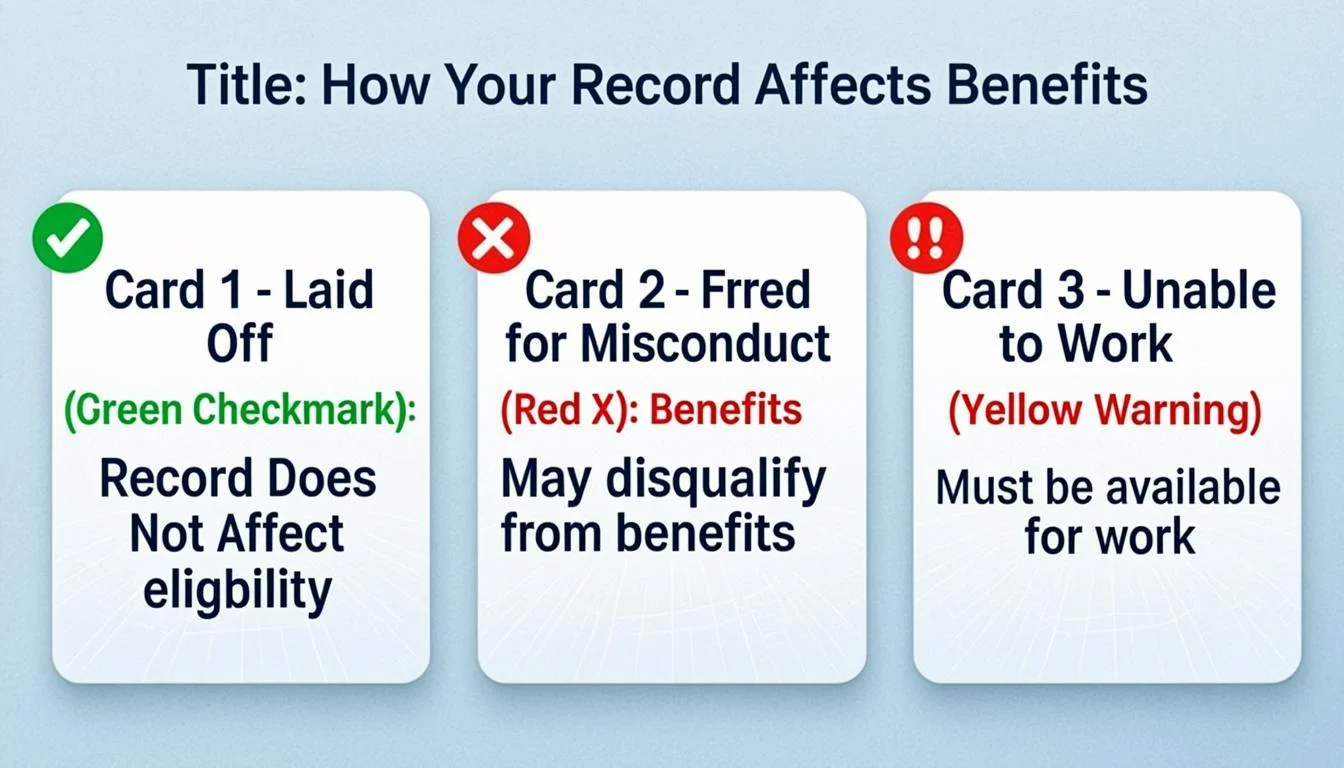
The key factor is not whether you have a criminal record, but rather the reason you became unemployed. If you were laid off through no fault of your own — for example, a company downsizing or a position elimination — your criminal history generally has no bearing on your claim. The disqualifying factors for unemployment focus on the cause of job separation, not your background.
However, the situation changes if your criminal record is directly connected to why you lost your job. If you were fired because of a conviction, or if you were terminated for misconduct related to a criminal act, that can absolutely affect your eligibility. Each state evaluates these cases individually, looking at the specific facts of your separation from employment.
When a Felony Conviction CAN Affect Your Benefits
There are specific scenarios where a felony conviction or criminal record can interfere with your ability to collect unemployment. Understanding these situations helps you prepare a stronger case when you file your claim.
1. You Were Fired for Criminal Misconduct
If your employer terminated you because you committed a crime on the job — such as theft, assault, fraud, or drug use at work — most states will consider this "misconduct" and will deny your unemployment claim. Misconduct is one of the most common reasons for denial, and criminal behavior that leads to termination falls squarely into this category.
It is important to understand the distinction here. If you committed a crime outside of work that had no connection to your job performance, and your employer found out and fired you, the outcome can vary by state. Some states may still approve your claim if the off-duty conduct did not directly harm the employer's business interests.
2. You Are Incarcerated or Unable to Work
One of the core requirements for receiving unemployment is that you must be able and available to work. If you are currently incarcerated, on house arrest that prevents you from working, or otherwise unable to accept employment, you cannot collect benefits. This is not about your criminal record per se — it is about meeting the available-for-work requirement that applies to all claimants.
Once you are released and can actively seek employment, you may be eligible to file or reopen your claim. The key is demonstrating that you are ready, willing, and able to accept suitable work immediately.
3. Your Occupation Requires a Clean Record
Some professions require a clean criminal record as a condition of employment — licensed nurses, teachers, security guards, commercial drivers, and financial professionals are common examples. If you lose your license due to a conviction and cannot work in your field, this creates a gray area for unemployment claims.
In many states, losing a professional license does not automatically make you ineligible for benefits if you can still perform other types of work. The unemployment office will evaluate whether you are able to accept suitable alternative employment, even if it pays less or is outside your original profession.
State-by-State Variations in Criminal Record Policies
Unemployment insurance is administered at the state level, which means rules regarding criminal records and eligibility can vary significantly. Some states are more lenient, focusing solely on the reason for job separation, while others have additional restrictions that can make it harder for people with records to qualify.
Ban-the-Box Laws and Their Impact
Over 35 states and 150 cities have adopted "ban-the-box" legislation, which prevents employers from asking about criminal history on initial job applications. While these laws primarily affect hiring practices, they also create a more favorable environment for people with records who are seeking work during their unemployment period.
States with strong ban-the-box laws tend to have unemployment systems that are less likely to penalize applicants for having a criminal record. California, New York, Illinois, and Washington are among the states with the most protective policies for workers with criminal histories.
States With Stricter Policies
A handful of states have rules that can make it more difficult for people with certain felony convictions to receive benefits. For example, some states impose additional waiting periods or require proof of rehabilitation before approving claims from individuals with recent violent felony convictions. Always check your specific state's unemployment agency website for the most current rules.
How to File for Unemployment With a Criminal Record
Filing for unemployment when you have a criminal record requires careful preparation. The process is the same as for any other applicant, but being proactive and thorough can help you avoid unnecessary delays or denials.
Step 1: Gather Your Documentation
Before you file, collect all relevant documents. This includes your separation letter from your employer, pay stubs showing your earnings history, and any court documents related to your conviction. If your record has been expunged or sealed, gather documentation proving that as well. Having everything organized before you file your claim will make the process smoother.
Step 2: Answer Questions Honestly
When you complete your unemployment application, you will be asked about the reason for your job separation. Answer honestly but concisely. If you were laid off for economic reasons, say so clearly. If you were fired, explain the circumstances factually without volunteering unnecessary details about your criminal record unless specifically asked.
Lying on your unemployment application is a serious offense that can result in fraud charges and penalties. It is always better to be truthful, even if you think your record might hurt your chances. Many claims from people with criminal histories are approved when the facts support eligibility.
Step 3: Be Prepared for a Potential Hearing
If your claim is initially denied because of your criminal record or the circumstances of your termination, you have the right to appeal. Many successful claims are won on appeal. Prepare for your hearing by gathering evidence of your work history, any performance reviews or commendations, and documentation showing you are actively seeking employment. Learning how to appeal an unemployment denial can make the difference between winning and losing your case.
Expungement and Sealed Records
If your criminal record has been expunged or sealed, you generally do not need to disclose it on your unemployment application. Expungement effectively removes the conviction from your public record, and most state unemployment agencies will not have access to sealed records.
However, there are exceptions. Some states require disclosure of expunged records for certain types of employment or for positions that require security clearances. If you are unsure whether you need to disclose an expunged record, consult with a legal aid attorney in your state — many offer free consultations for employment-related legal matters.
The process of getting a record expunged varies widely by state. Some states allow expungement of misdemeanors but not felonies, while others have more generous provisions. If expungement is available to you, it can significantly improve both your employment prospects and your ability to navigate the unemployment system more smoothly.
Common Myths About Criminal Records and Unemployment
There is a lot of misinformation circulating about how criminal records affect unemployment benefits. Let us address some of the most common myths.
Myth: Felons Can Never Get Unemployment
This is false. A felony conviction does not create a permanent bar to unemployment benefits. If you were laid off through no fault of your own and you meet all other eligibility requirements, your felony conviction typically will not prevent you from collecting benefits. The focus is on the reason for unemployment, not your criminal history.
Myth: You Have to Report Your Record on Every Application
Not necessarily. Many states only ask about criminal records in specific contexts, and if your record has been expunged, you usually do not need to disclose it. Additionally, ban-the-box laws in many jurisdictions prevent initial inquiries about criminal history. Understanding common application mistakes can help you avoid pitfalls.
Myth: If You Were Fired, You Cannot Get Benefits
Being fired does not automatically disqualify you. If you were terminated for reasons that do not constitute misconduct under your state's definition — such as poor performance, lack of skills, or a personality conflict — you may still qualify for benefits. The distinction between misconduct and no-fault termination is critical and varies by state.
Tips for a Successful Claim With a Criminal Record
Navigating the unemployment system with a criminal record can feel daunting, but these practical tips can improve your chances of a successful outcome.
- Know your state's rules: Every state has different standards for what constitutes misconduct and how criminal records factor into eligibility decisions. Research your state's specific guidelines before filing.
- Document everything: Keep records of your termination, any communications with your employer, and your job search activities. Strong documentation supports your work search efforts.
- Seek legal help if denied: If your claim is denied, contact your local legal aid office. Many provide free representation for unemployment appeals, and having an attorney significantly improves your chances of winning.
- Stay active in your job search: Meeting your work search requirements is essential. Document every application, interview, and networking event.
- Consider reentry programs: Many organizations offer job placement assistance specifically for people with criminal records. These programs can help you find work faster and demonstrate that you are actively seeking employment.
Resources for Workers With Criminal Records
Several organizations and programs exist to help individuals with criminal records find employment and navigate the unemployment system. The National HIRE Network provides state-by-state information on expungement and employment rights. The Department of Labor's Federal Bonding Program offers free fidelity bonds to employers who hire people with records, removing a common barrier to employment.
Local workforce development boards often have specialized programs for formerly incarcerated individuals, including job training, resume assistance, and direct connections to employers who are willing to hire people with criminal histories. These resources can be invaluable when you are trying to get back to work quickly after a period of unemployment.
Remember that having a criminal record does not define your worth as a worker or your right to access the benefits you earned. The unemployment system is designed to support workers during transitions, and with the right preparation and knowledge, you can successfully navigate the process even with a criminal history in your background.