Last updated: October 11, 2026. Notice deadlines and waiver rules vary by state - act fast and confirm details with your state agency.
Getting a letter that says you owe the state money is scary. If you got an overpayment notice, you are not alone. States send millions of these each year. Most folks had no idea they were paid too much. The good news? This letter is not a final order. You have rights. You have choices. In many cases, you can fight it or get it waived.
An overpayment means the state says you got cash you should not have. This can happen for many reasons. Some are your fault. Some are the state's fault. Some are no one's fault. The key point: never ignore the notice. If you do nothing, the state can take the cash from your pay or your tax refund.
Why Overpayments Happen
Overpayments happen when what you got does not match what you should have gotten. The state may have made a math error. You may have made a mistake on your claim. Your boss may have sent new info that changed your case. The rules can be hard to follow. Good folks make errors all the time without knowing.
One big cause is not reporting earnings the right way on your weekly or biweekly claim form. If you earned money from a side job or part-time work and did not report it, the state may have paid you too much. Even small errors add up over weeks. You might not find out for months.
Another common cause is a status change that the state missed. Say you started a new job but your first check was late. You may have said you were jobless for that week. The state finds out later when your boss reports your wages. When they match those reports to your claims, they spot the error.
It helps to know what can disqualify you from benefits. Many debts start with a rule issue found after the fact. If you were barred from getting benefits after the fact, the state will want money back for every week after that point.
Fraud vs. Non-Fraud Overpayments
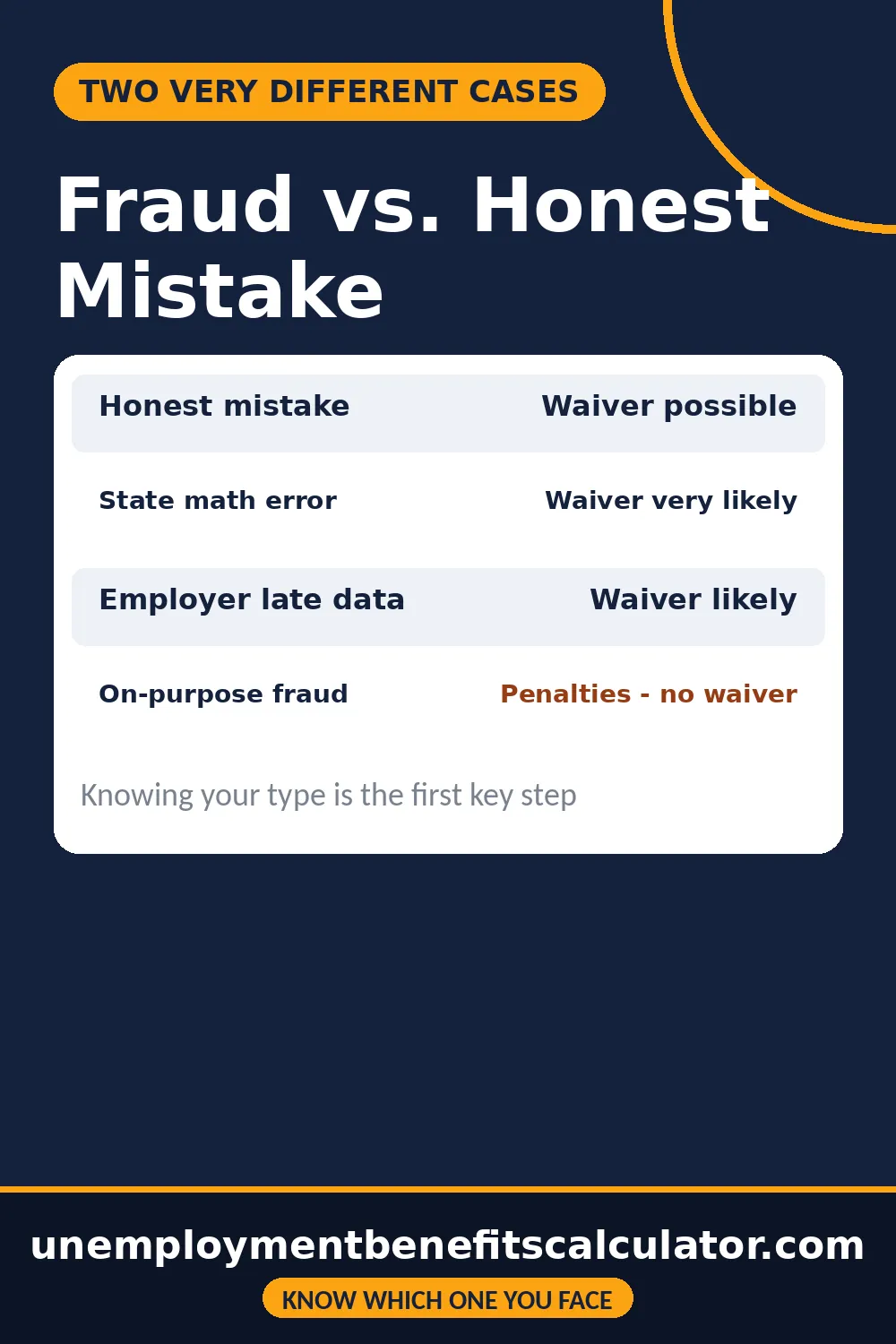
Not all overpayments are the same. States draw a clear line between fraud and non-fraud cases. This changes everything. It affects whether you can get a waiver. It affects whether you face extra fees. It affects how hard the state pushes to collect. Knowing which type you face is your first key step.
A non-fraud overpayment means you got too much cash but did not lie on purpose. Maybe you made an honest mistake on your claim. Maybe the state got the math wrong. Maybe your boss reported your wages late. In these cases, you can usually ask for a waiver. A waiver forgives the debt if paying it back would cause real hardship. Most states work with you on these cases.
A fraud overpayment means the state thinks you lied to get paid. This could mean working full-time while claiming you had no job. It could mean hiding your pay week after week. Fraud cases carry steep fines. Expect a 15 percent extra charge on top of the debt. You may also lose future benefits. Criminal charges are possible too. If you face a fraud label, you need to learn the appeals process right away.
What to Do When You Get a Notice
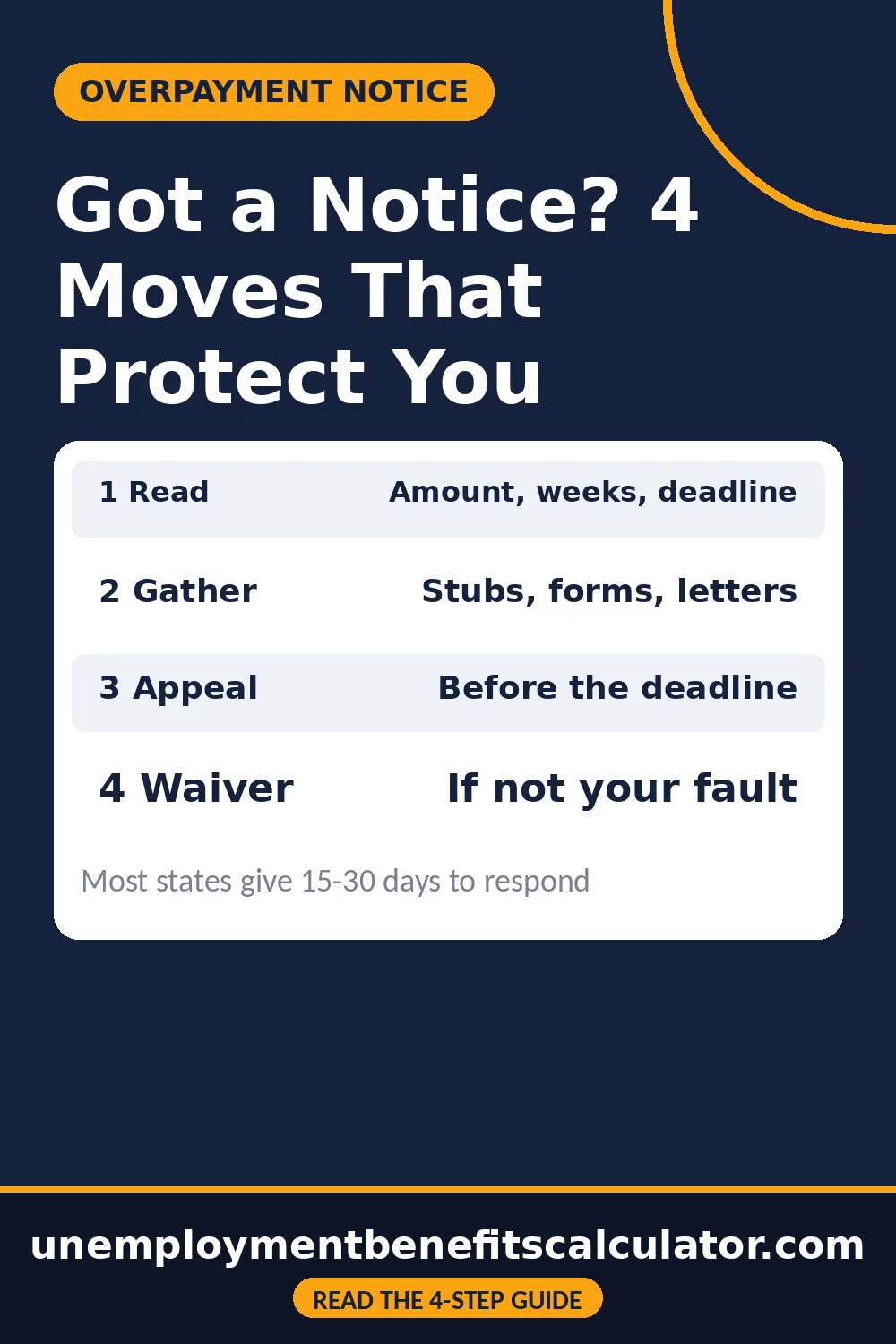
The moment you get that letter, the clock starts. Most states give you 15 to 30 days to respond or appeal. Miss that deadline and you may lose your right to fight. Treat the letter as urgent. Here is what to do, step by step.
How to Request a Waiver
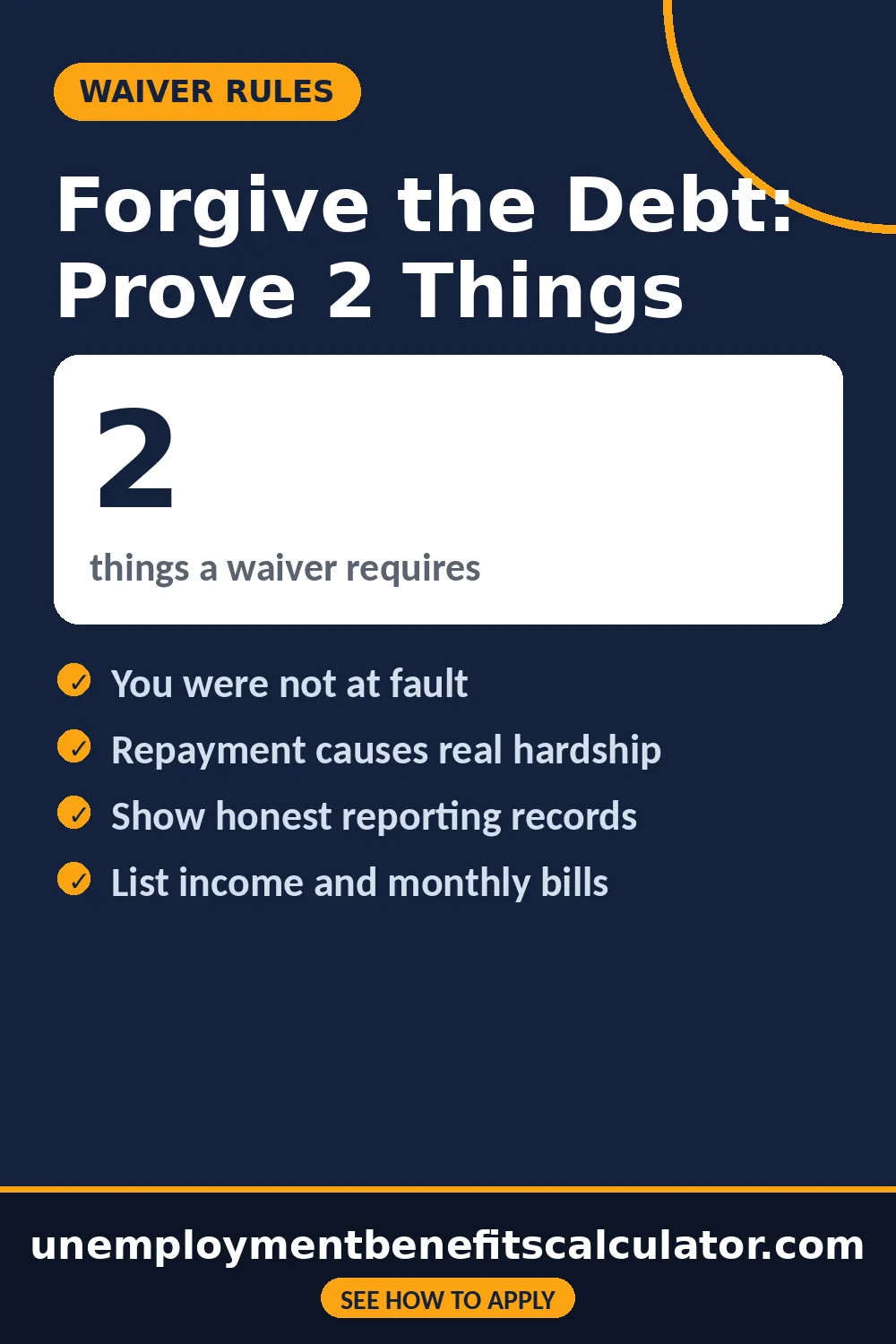
A waiver is your best choice when the debt was not your fault. It asks the state to forgive what you owe. Most states have a formal waiver process. You must prove two things. First, that you were not at fault. Second, that paying it back would cause real hardship.
To show you were not at fault, prove you reported your pay honestly. Show that you answered claim forms truthfully. Show that you did not hide anything from the state. If the state made a math error or your boss reported wages late, your case is strong. If you were working part-time while on benefits and reported correctly, but the state still paid you too much, you should qualify for a waiver.
To show hardship, give a clear picture of your money setup. This means proof of income, a list of monthly bills, bank balances, and any debts. The state wants to see that paying back would make it hard to cover basic needs like rent, food, and health care. Be honest and thorough. Trying to make things look worse can hurt your case.
The waiver process varies by state. Some let you apply online. Others need a letter by mail. Check your state website for forms and rules. If your waiver is denied, you can usually appeal that too. Do not give up after the first no.
What Happens If You Do Not Pay
Ignoring the notice is the worst move. The state has strong tools to collect. It will use them if you do not respond. The problems grow over time. A small issue can turn into a big crisis fast.
The most common tool is taking your tax refunds. The state reports your debt to the Treasury Offset Program. Any tax refund you expect will go toward what you owe instead. This happens on its own. You cannot stop it at that point. Fix the issue before tax season.
The state can also garnish your pay. Your boss must deduct cash from your check and send it to the state. Garnishment cuts your take-home pay. It stays in place until the debt is paid. If you file for benefits again, the state will cut your new checks until the old debt is settled. Knowing how much your benefits should be helps you plan for these cuts.
For fraud cases, things get worse. Fines and interest pile up. The state may file criminal charges. Jail time is possible. The fraud can be reported to credit bureaus. That makes it harder to rent, get loans, or pass a background check.
How to Appeal the Finding
If you think the finding is wrong, you can appeal. The process is much like appealing a denial of benefits. You ask for a hearing. You present your proof. A judge decides. The key difference is that the state must prove you were overpaid. You get to show why the finding is wrong or the amount is off.
Write your appeal before the deadline on the letter. Most states allow 15 to 30 days. Include your name, case number, and a short reason. You do not need to make your whole case at this step. Just say you disagree and want a hearing.
Prepare for the hearing like any legal matter. Gather all your records. Put your proof in order by date. Be ready to explain why the finding is wrong. If the state made an error, bring letters or screenshots showing what they told you. If your boss reported wrong wages, bring pay stubs that show the real amounts.
Many people win these appeals. State records are not always right. Boss wage reports can be wrong. The math can have errors. The ruling can be based on partial facts. Do not assume the letter is correct just because the state sent it. Challenge it if you have grounds.
Wondering how much each week is worth? Our free weekly benefit calculator estimates your check from your state's formula in under a minute.
Payment Plans and Your Choices
If the debt is valid and you cannot get a waiver, you still have choices. You do not have to pay it all at once. Most states offer payment plans. These let you pay in small monthly amounts over time. The state would rather get the cash slowly than not at all.
When you set up a plan, be honest about what you can afford. Cover your basic costs first. Then offer what is left for the debt. The state may ask for a form showing your income and bills. If you offer too little, they may push back. But you can explain why their amount would cause hardship.
One thing to watch: if you are still getting benefits, the state will deduct the debt from your current checks. This is called benefit offset. It can cut your weekly amount by half or more. If your benefits have ended and you wonder how long benefits can last, the offset only applies while you are getting paid. After your benefit year ends, the state uses other methods.
How It Affects Your Taxes
A debt like this can make your taxes more complex. If you got benefits in one year and were told to pay them back later, you may have already paid taxes on cash you had to return. The IRS and most states have rules for this. Know them to avoid overpaying.
If you repaid in the same year you got the benefits, your Form 1099-G should show the right amount. Just report that number on your return. The math works out. But if you repaid a debt from a prior year, it gets harder. You may need to claim a deduction on your current return. This is called a "claim of right" deduction. It can lower your tax bill for the year you make the payment.
If the state took your tax refund to cover the debt, that cash went toward what you owed. You usually cannot deduct the seized amount on your federal return. But you may be able to adjust your state return. Since jobless benefits affect your taxes in these ways, talk to a tax expert when a debt spans more than one year.
How to Prevent Future Overpayments
The best fix is to stop it before it starts. You cannot control state errors or late boss reports. But you can control how well you report your own info. A few good habits can save you from the stress of a letter later.
Always report your pay correctly on your biweekly claim form. If you are not sure how to report a certain type of income, call the state before you file. It is better to wait a day and get the right answer than to guess and risk a debt. Keep good records of every claim you make. Write down the date, the pay you reported, and any questions you were unsure about.
Report any change in your work status right away. If you start a new job, your hours go up, you get severance, or you are offered work, tell the state at once. Even if you are not sure the change matters, let them decide. Acting early keeps you safe from past debts that build up over weeks.
Make sure you know what counts as a valid job search. Falling short on work search rules can trigger a past-due bar. That is one of the most common and frustrating causes of debt. Track every application and job search step. Keep those records for at least a year after your benefit year ends.
If you are ever unsure about a rule, your state has staff who can help. You can also check whether applying for benefits online gives you clearer guidance. Many states have better sites now with live checks and tools that help you avoid errors.
Keep reading: benefit fraud penalties and how to avoid them, and what can disqualify your claim.
Frequently Asked Questions
Why did I get an unemployment overpayment notice?
Overpayments happen when what you received does not match what you were owed - a state math error, a mistake on your claim, late employer wage data, or earnings that were not reported correctly on your weekly form.
How long do I have to respond to the notice?
Most states give you 15 to 30 days to respond or appeal. Miss that deadline and you may lose your right to fight the finding - treat the letter as urgent from day one.
What is the difference between fraud and non-fraud overpayment?
Non-fraud means an honest mistake - yours, the agency's, or your employer's. Waivers are usually available. Fraud means the state believes you lied to get paid - it carries penalties and typically no waiver.
Can an overpayment be forgiven?
Yes - through a waiver. You must prove two things: you were not at fault (you reported honestly), and repaying would cause real hardship. State math errors and late employer reports make a strong case.
What proof do I need for a waiver?
Show you reported pay honestly - claim forms, pay stubs, agency letters - and give a clear picture of your finances: proof of income and a list of monthly bills to document the hardship.
What happens if I ignore the notice?
The state can seize your tax refunds through the Treasury Offset Program, garnish your wages, and block future claims. Problems grow over time - never ignore the letter.
Can I pay back in installments?
Yes. Most states offer payment plans with small monthly amounts. Be honest about what you can afford - cover basic costs first, then offer what is left, usually on a financial disclosure form.
How does repaying benefits affect my taxes?
If you repaid in the same year you received the benefits, your Form 1099-G should show the corrected amount - report that. If you repaid a prior year's benefits, you may need to claim a deduction or credit on your current return.