
The Basic Rule: You Can Move, But Your Claim Does Not Move With You
Let us start with the most important thing to understand: moving to a different state does not automatically cancel your unemployment claim. Your benefits do not just vanish the moment you cross a state line. But the process of keeping them flowing is not seamless either.
When you file for unemployment, you file in the state where you worked — specifically, the state where your employer paid unemployment taxes on your wages. That state is called your "claiming state," and it remains responsible for your claim even after you move.
This surprises a lot of people. They assume that once they relocate, they need to refile in their new state. That is not how it works. Your original claim stays with the original state. What changes is how you manage and certify for your ongoing benefits from a new location.
Which State Actually Pays Your Benefits?
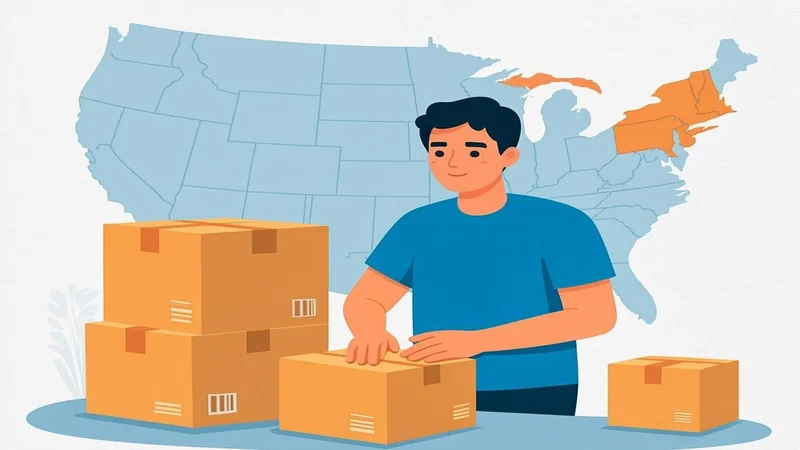
The claiming state — the one where you earned the wages that form the basis of your benefit calculation — is the state that pays. Not the state you move to.
So if you worked in Pennsylvania for eight years, got laid off, filed for unemployment in Pennsylvania, and then moved to North Carolina three weeks later, Pennsylvania still handles your claim. North Carolina's unemployment agency has nothing to do with your benefit payments.
This is true even though you now live in North Carolina. Your weekly benefit amount, your maximum benefit duration, and the rules governing your claim all come from Pennsylvania law. You can read more about how your weekly benefit amount is calculated to understand why the claiming state matters so much.
What If You Worked in Multiple States?
If you earned wages in more than one state, you may be able to choose which state to file in — or you might need to file a "combined wage claim." Combined wage claims let you use earnings from multiple states to qualify for benefits, but the mechanics are complex.
With a combined wage claim, one state acts as the paying state and the other states transfer your wage records to support the claim. The paying state's rules govern your benefit amount and duration. If you are in this situation, you should already know about it from when you initially apply for unemployment benefits. But if you are considering a move and have a combined wage claim, talk to your claims examiner before relocating.
How Interstate Claims Work
The formal term for what happens when you move while on unemployment is an "interstate claim." The U.S. Department of Labor has procedures for this, and states handle interstate claims routinely. You are not the first person to move mid-claim, and the system is built to accommodate it.
Here is the general process:
- You notify your claiming state of your new address. This is mandatory, not optional. Most states let you update your address online or by phone.
- Your claiming state converts your claim to an interstate claim. This is mostly an administrative change — your benefit amount does not change.
- Your new state's unemployment agency may get involved in verifying your job search activities and work availability, but the paying state remains the claiming state.
The key point: your benefit payments continue, issued by the same state that was paying them before you moved. You do not lose eligibility just because you changed your residence.
Steps to Take When You Relocate Mid-Claim

Timing matters here. The sooner you report your move, the smoother the transition. Waiting weeks to tell the unemployment office you have relocated is one of the fastest ways to create problems with your claim.
Here is what you should do, in order:
- Update your address before or immediately after moving. Most state unemployment portals have an address change feature. Use it. If your state does not have online address changes, call the claims center.
- Ask about interstate claim procedures. When you report the move, ask the representative what changes in your certification process. Some states switch you to a different certification system or schedule.
- Continue certifying on schedule. Do not skip a week of certification because you are busy moving. You can usually certify for unemployment by phone if you do not have reliable internet access during the transition.
- Adjust your job search to your new area. Once you are settled in the new state, your job search activities should reflect your new local labor market. Keep documenting everything as thoroughly as before.
One common mistake: people assume they need to close their old claim and open a new one in the new state. Do not do this. Closing your claim voluntarily can create complications and delays that take weeks to resolve. Let the interstate claim process handle the transition.
Do the Job Search Requirements Change?
Yes, and this is where things can get tricky. Your claiming state sets the rules for your job search, but those rules were written with the assumption that you are looking for work in that state's labor market.
When you move, you are now looking for work in a different state, possibly in a different labor market entirely. Most claiming states will accept job search activities performed in your new state, but you need to make sure you are meeting the specific requirements — number of activities per week, types of acceptable activities, and documentation standards — of your claiming state.
Do not assume the new state's rules apply. They do not. Your job search requirements are set by the state paying your benefits, not the state where you currently live. This can feel odd — you are applying for jobs in Texas but following Pennsylvania's job search documentation rules — but that is how interstate claims work.
Registering with the New State's Job Service
Some claiming states require you to register with the employment service in your new state. This is usually a simple process — you create an account on the new state's job bank website and upload your resume. It takes about 15 minutes, and it keeps you in compliance.
Not all states require this, but many do. Ask your claims examiner when you report your address change. If they say you need to register with the new state's employment service, do it right away. Failing to register can result in a benefit stop.
What About "Available for Work" in a New State?
The availability requirement does not change just because you moved. You still need to be available for work and able to accept suitable employment. But what counts as "suitable" work may shift based on your new local labor market.
For example, if you were a graphic designer in New York City and you move to a small town in Wyoming, the range of suitable graphic design jobs shrinks dramatically. Your claiming state may adjust its expectations for your job search based on the realities of your new location. Or it may not — some states are rigid about this.
If you find that suitable work in your field is genuinely not available in your new area, you may need to broaden your search to related occupations or consider remote work. The unemployment agency expects you to make reasonable efforts to adapt to the local job market.
Benefit Amount and Duration: Do They Change?
No. Your weekly benefit amount and your maximum duration of benefits are locked in when your claim is established. Moving to a state with higher or lower maximum benefits does not change what you receive.
If you were getting $450 per week from Pennsylvania for up to 26 weeks, that does not change when you move to North Carolina. You still get $450 per week, for up to 26 weeks, paid by Pennsylvania. North Carolina's benefit formula and duration limits are irrelevant to your claim.
This is one area where interstate claims are straightforward. The numbers on your claim are fixed. You can verify your how much unemployment you will get by checking your original award letter or your claim account in the paying state's portal.
Common Problems When Moving Mid-Claim

Interstate claims work, but they are not glitch-free. Here are the problems people encounter most often:
- Delayed payments: The administrative transition from an intrastate to an interstate claim can cause a delay of one to two weeks in your payments. Plan for this gap, especially if you are living on tight margins.
- Misdirected mail: Even after you update your address, some correspondence may still go to your old address for a cycle or two. Sign up for electronic notifications if your state offers them.
- Confusion about job search reporting: You may need to report your job search to both the claiming state and the new state's employment service. Clarify this early to avoid missing a requirement.
- Different certification schedules: Your claiming state might switch you to a different certification day or method after you move. Pay attention to any notices about schedule changes.
If your payments stop unexpectedly after a move, do not panic and do not assume the worst. Contact your claiming state right away. Most payment interruptions are administrative and can be resolved quickly if you catch them early. You can also check your claim status online to see if there is a hold or issue flag on your account.
What If You Move to a State with No State Income Tax?
A few people consider moving specifically to a state with no income tax while collecting unemployment. It is a reasonable thought — if your benefits are taxable at the federal level, reducing or eliminating state income tax could mean more money in your pocket.
Unemployment benefits are subject to federal income tax, but state tax treatment varies. States like Florida, Texas, Nevada, Wyoming, Washington, Alaska, South Dakota, and Tennessee have no state income tax, which means they do not tax your UI benefits.
But here is the catch: your claiming state's tax rules still apply to the income it pays you. Moving to Florida does not change the fact that Pennsylvania taxes your Pennsylvania-issued benefits. You would need to establish tax residency in the new state and potentially file a part-year return in both states. Learn more about how unemployment affects your taxes before making any moves for tax reasons alone.
Special Situations
Military Spouses and Interstate Claims
Military spouses face unique challenges with unemployment when they relocate due to a service member's permanent change of station (PCS) move. Many states have adopted laws that make it easier for military spouses to maintain their unemployment claims or establish new ones after a military-required move.
If you are a military spouse who had to quit a job because of a PCS move, you may qualify for unemployment benefits in the state where you were employed, even though the separation was technically voluntary. Some states specifically exempt military spouse separations from their voluntary quit disqualification rules.
Moving to Collect Benefits from a State with Higher Payments
People sometimes ask if they can move to a state with higher benefit amounts and file there instead. The answer is no. You file in the state where you earned your wages, not where you currently live. You cannot game the system by moving to a high-benefit state. You can look at maximum unemployment benefits by state out of curiosity, but it will not change where your claim is domiciled.
If you are thinking about how relocating for work affects unemployment, the same principle applies: your wage history determines your claiming state, not your current address.
Can You Collect from Another State After Your Current Claim Ends?
Once your current benefit year ends and your claim is exhausted, you would file a new claim based on any wages you earned since the original claim began. If you have been working in your new state, you might file your next claim there.
But if you have not worked since moving — you have been collecting benefits and searching for a job — you would have no new wages in the new state to base a claim on. You would need to use any remaining base period wages from your original claiming state, if any exist.
Some people in this situation discover they can collect unemployment from another state using wages from a previous employer in a third state. This is possible through the combined wage claim process, but only if you have sufficient earnings in that other state.
What Happens If You Refuse a Job Offer in Your New State?
Job offers do not stop coming just because you moved. If you receive a suitable offer in your new state and turn it down, the same rules apply as if you had refused a job in your original state. Your claiming state will evaluate whether the refusal was justified.
Refusing suitable work without good cause is one of the fastest ways to lose your benefits. The definition of "suitable" depends on your work history, the wage offered, and local labor conditions. Before you refuse a job offer while on unemployment, make sure you understand what counts as suitable work in your situation — or you risk being disqualified from unemployment benefits entirely.
The Bottom Line
Moving to a different state while on unemployment is manageable. Your benefits do not disappear. Your claiming state continues to pay. The main things you need to do are: report your address change promptly, keep certifying on schedule, and make sure your job search in the new state meets the claiming state's requirements.
The biggest pitfalls are administrative delays and confusion about which state's rules you need to follow. Stay in communication with your claims examiner, document everything, and do not let a cross-country move derail the benefits you are entitled to receive.
If you run into problems — delayed payments, confusing instructions, or a stop on your claim — reach out to your claiming state's unemployment office immediately. Most interstate claim issues are solvable, but they get harder to fix the longer you wait.