
Last updated: October 11, 2026. State severance rules change - confirm how your state treats exit pay before you file.
Losing a job is hard. Then you learn your exit pay may change your jobless checks. It feels unfair. You earned that cash. Why should it cut your safety net? The truth is it depends on where you live. It also depends on how your exit pay is set up. This guide covers it all in plain terms.
Rules differ by state. Some count exit pay as wages. That means your checks get held or cut. Other states do not count it at all. Knowing your state rules first saves you weeks of stress. It saves you lost cash too.
What Is Severance Pay?
Severance pay is cash your boss gives you when your job ends. The law does not require it. Most bosses offer it so you sign a release. That release means you give up your right to sue. The cash can come as one big check. Or it can come as weekly pay like your old wage. The type matters a lot for your jobless checks.
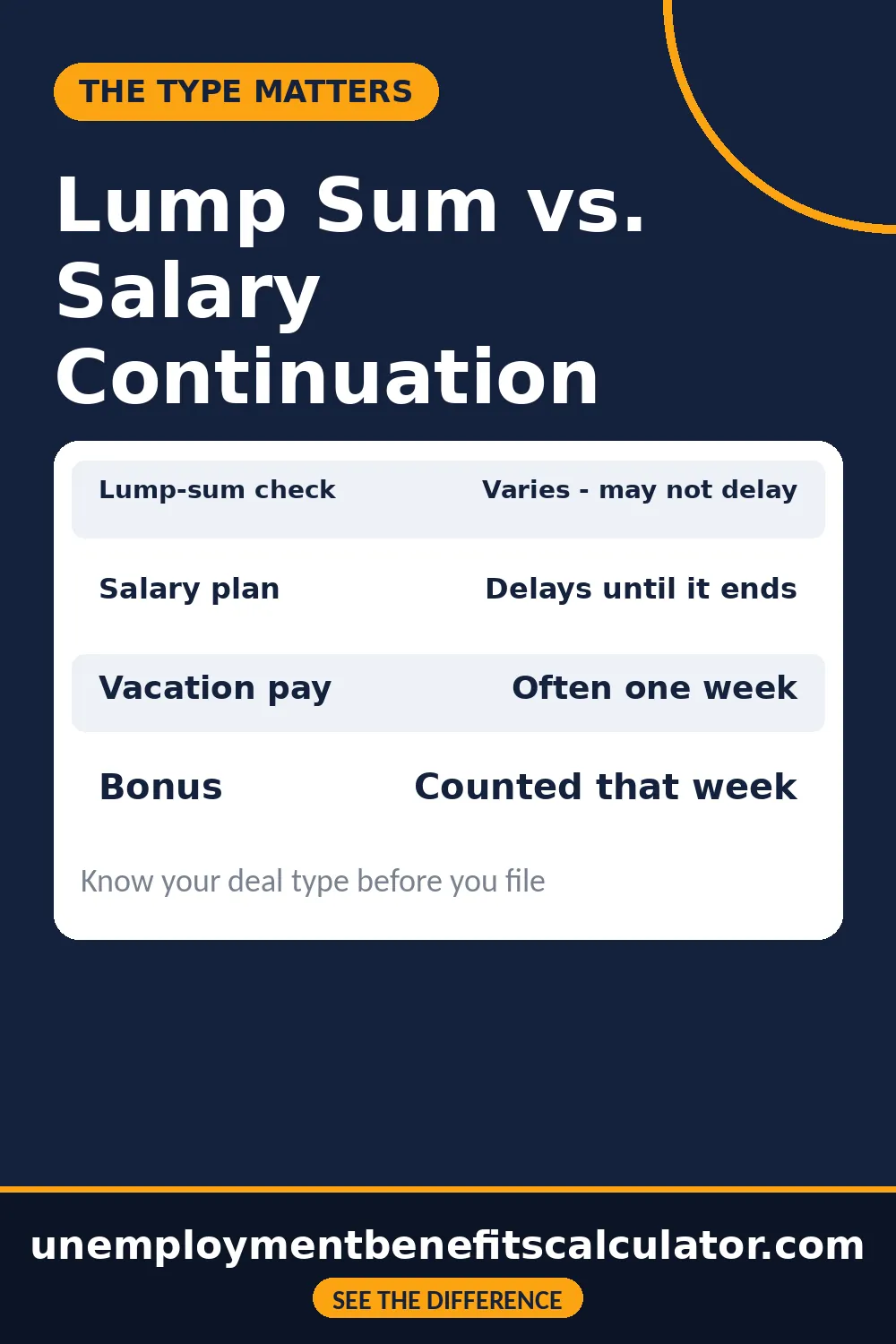
A lump-sum deal is one payment. You get it all at once. Think of a check for eight weeks of pay in one day. A salary plan pays you over time. You get a check every two weeks. It looks just like a pay stub. Your health plan may even stay active. This type is far more likely to change your jobless checks.
Some folks get other pay when they leave too. This can be cash for unused vacation days. It can be sick leave pay. It can be bonus pay. Each type may be treated in its own way. Know what each part of your exit deal is called. That way when you apply for jobless benefits online you can report each part right.
How Severance Affects Your Claim
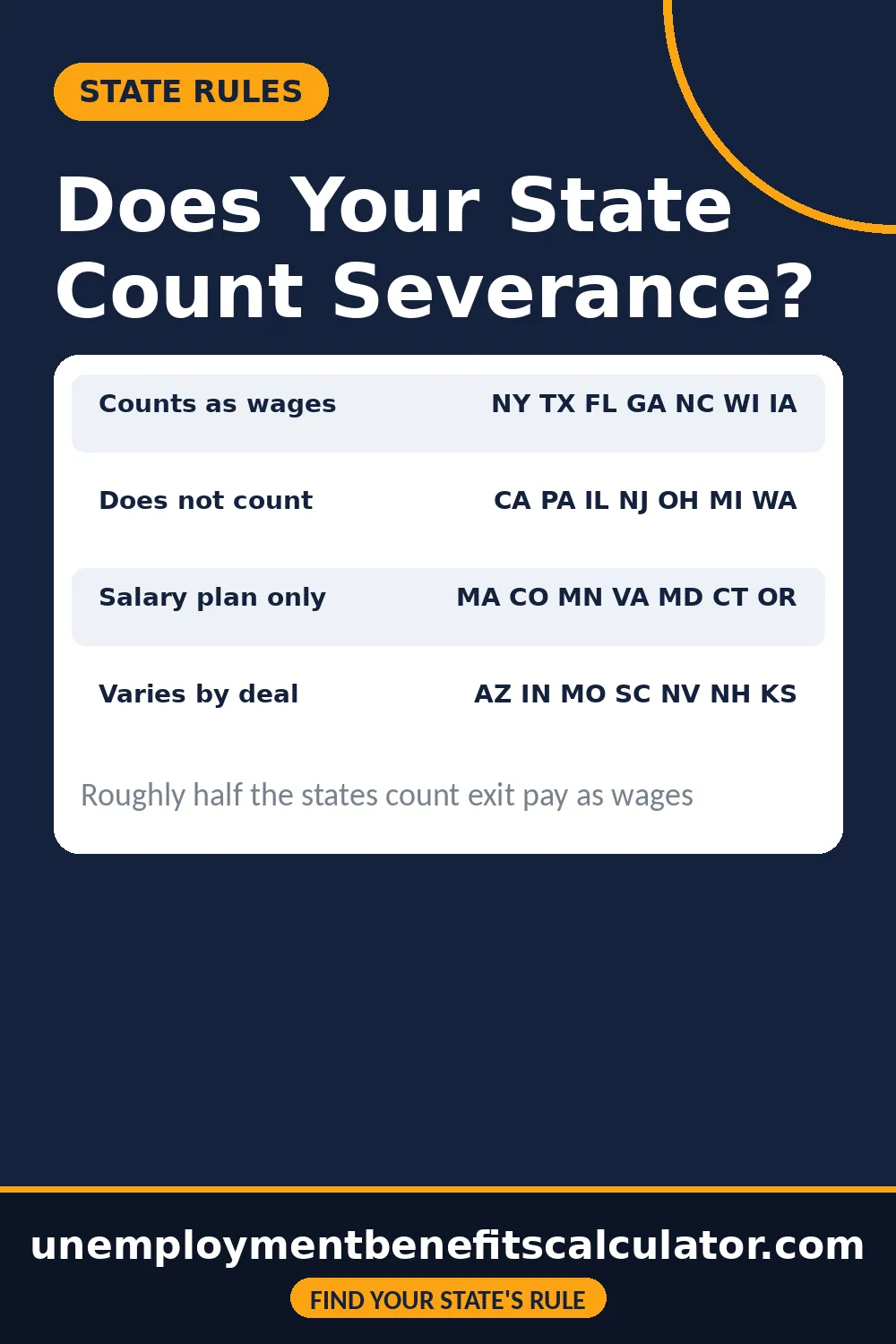
The core question is simple. Does exit pay count as wages? If your state says yes your checks may be held. They may be cut. They may be denied for weeks covered. If your state says no your exit pay does not change your checks at all. The split is roughly even across the country.
About half the states count it as wages. These states look at the exit pay span. They treat it as if you still have a job. During those weeks you cannot get full checks. Some states let you file but hold your cash. Others make you wait until the exit pay span ends. Once it ends your checks begin.
The other half of states do not count it. In these states you get full checks while also getting exit pay. You still need to meet all other rules. You must be able and willing to work. But the exit pay itself does not block or cut your checks. It is key to know how much your weekly benefit amount is before you plan your cash flow.
Wondering how much each week is worth? Our free weekly benefit calculator estimates your check from your state's formula in under a minute.
Lump-Sum vs. Salary Continuation
This is the biggest factor in how your checks play out. The two types are treated very differently. Knowing which one you have is step one.
A lump-sum deal is one check. It covers a set number of weeks. Many states treat this as a one-time event. It is not ongoing wages. In these states you can often start checks right away. Or you wait a short time. The lump sum may not cut your weekly amount. But some states spread that sum over the weeks it covers. That can push back your start date.
Salary continuation is quite different. You get regular checks on your old pay dates. Your old boss is still paying you. Most states that count exit pay treat this like still working. You cannot get jobless checks while still on the payroll. Your pay will not start until the salary plan ends. This is true even if the pay is less than your old wage.
If you are working part-time while on benefits you know earned cash reduces your check. Exit pay works the same way in states that count it. The state takes the exit pay sum and reduces your check for that week. If the exit pay is more than your check you get zero for that week.
Can You Delay Filing Until Exit Pay Ends?
Yes you can wait. But waiting has risks. In states where exit pay holds up checks some people file after the exit pay span ends. This can mean getting your first check sooner. But there are trade-offs you need to know.
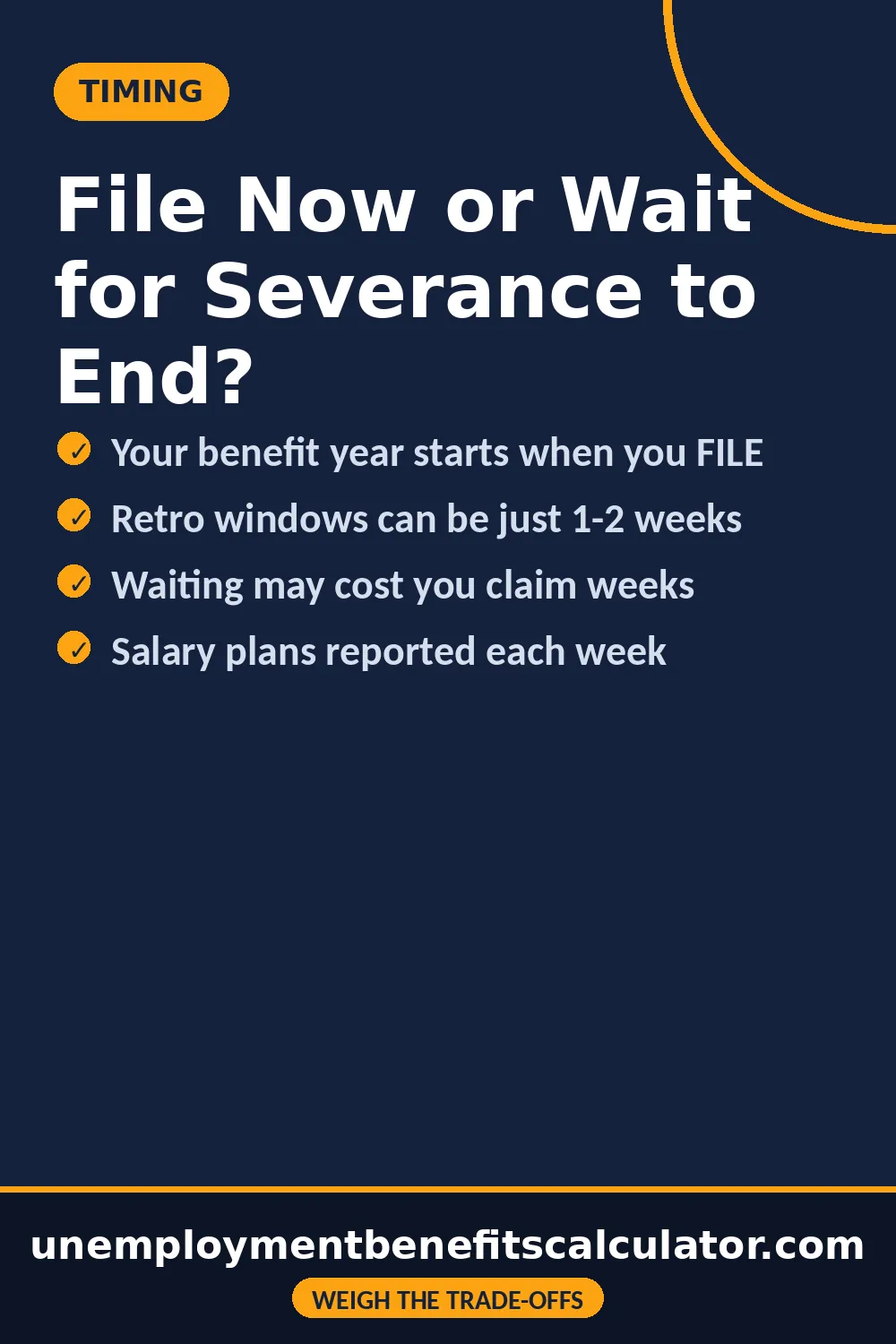
Most states have a time limit for filing. This is the retro window. If you wait too long you may lose weeks of checks you could have claimed. Some states only let you go back one or two weeks. Others allow more. Your benefit year starts when you file. It does not start when you lost your job.
If you wait and your exit pay lasts a long time you may miss out on the full span of checks. Most states offer up to 26 weeks. Knowing how long benefits can last helps you decide if filing now or later is better. If you file late and your benefit year runs out before you find work you lose weeks you could have used.
The best move in most cases is to file right away. Let the state decide how exit pay affects your claim. If they hold your start date at least your claim is on record. You will not miss any filing windows. You may even get back pay for weeks where the state found your exit pay did not count.
How to Report Severance on Your Claim
Honest reporting is your best friend. When you file your claim most states ask about any exit pay, vacation pay, or bonus you got. Answer truthfully. If your state counts it they will adjust your checks. If they do not count it you still get full pay. Hiding it is always a bad idea.
When you certify for your weekly benefits you may be asked if you got any cash that week. If your exit pay is paid as a salary plan you must report it each week. If it was a lump sum paid before your first form you report it once at filing. Check with your state for the exact steps.
Not reporting exit pay can lead to big trouble. The state finds out in time through wage reports from your old boss. When they do they send a demand for payback. This is called an overpayment. It can come with fraud fines too. Read about handling an overpayment notice to learn what steps to take.
Fired vs. Laid Off With Severance
Your reason for losing the job matters a lot. If you were laid off you clearly qualify for checks. Exit pay is just extra cash. But if you were fired things get more complex. You need to know if you can get benefits if you were fired. The answer hinges on why you were let go.
If you were fired for bad acts you may be denied checks. Exit pay does not change that. The exit pay question does not even come up. But if you were fired without cause you can usually get checks. Your exit pay may still change the timing or amount though.
Some bosses offer exit pay even when they fire you for cause. They do this to avoid legal risk. Do not assume exit pay means you qualify for checks. The state makes its own call. The same goes if you quit your job with good cause. Exit pay does not change your need to prove good cause.
It helps to know what can disqualify you from benefits. Exit pay is just one piece. Your reason for job loss matters. Your work search matters. Your being ready to work matters. A severance deal does not override other rules.
Severance and Your Taxes
Severance pay is taxable. Your old boss will report it on your W-2. This is true for both lump-sum and salary plan types. The IRS treats it the same as regular wages. You will owe federal tax on the full amount. Social Security and Medicare taxes apply too.
Here is the tricky part. If you also get jobless checks both sources are taxable. That can push you into a higher tax bracket. You may owe more than you think at tax time. Since jobless benefits affect your taxes in ways many folks miss plan ahead. Think about having extra tax taken from your exit pay or your checks.
Some states also tax exit pay and checks. Others do not tax jobless checks at all. Check your state rules. If you get big exit pay and checks in the same year talk to a tax pro. They can help you avoid a surprise bill later.
Severance and Job Search Rules
Even while you get exit pay most states require you to look for work. This catches many folks off guard. They think exit pay means a break from job hunting. But the job search rule does not pause just because you have exit cash coming in.
You must meet job search rules for your claim from week one. This usually means applying for a set number of jobs each week. It means keeping a log of your search steps. It means being ready to take suitable work if offered.
If your exit pay holds up your start date you should still begin your job search right away. When checks do start the state may ask for proof of your search from prior weeks. Being ready keeps your claim on track. It also helps you find your next role faster.
What If Your Boss Fights Your Claim?
Sometimes your old boss fights your claim even after paying exit pay. They might say you were fired for cause. They might say you quit. This can trigger a hearing. You need to be ready to show the facts.
If your claim is denied due to a boss dispute you can fight it. You should learn how to appeal the denial right away. The appeal deadline is short. It is usually 15 to 30 days. Bring your severance deal to the hearing. It often shows your boss agreed to let you go without fault. That helps your case a lot.
A severance release form can work in your favor. Most releases say you and the boss are parting ways. They do not assign blame. This backs up your claim that you lost your job through no fault of your own. Bring every paper you signed. The more proof you have the better your odds at the hearing.
Keep reading: how severance reduces weekly checks, severance delays to your first payment, and how lump-sum payments affect benefits.
Frequently Asked Questions
Does severance pay affect unemployment benefits?
It depends on your state. About half the states count severance as wages - checks are held, cut, or denied for the weeks it covers. The other half pay full checks while you receive severance.
Which states count severance as wages?
Examples of counting states include New York, Texas, Florida, Georgia, North Carolina, Wisconsin, and Iowa. States that generally do not count it include California, Pennsylvania, Illinois, New Jersey, Ohio, Michigan, and Washington.
Will a lump-sum severance delay my benefits?
Varies by state. Many treat a lump sum as a one-time event, so checks can start right away or after a short wait. Others spread the sum over the weeks it covers, which pushes back your start date.
What about salary continuation?
Most states that count exit pay treat salary continuation as still being on the payroll - you cannot collect until the salary plan ends, even if the pay is less than your old wage.
Can I wait to file until my severance ends?
Yes, but it is risky. Your benefit year starts when you file, not when the job ended, and some states only let you backdate one or two weeks - waiting can permanently cost you claim weeks.
How do I report severance on my claim?
Truthfully. Most states ask about exit pay, vacation pay, and bonuses when you file. Salary plans must be reported each certification week; hiding exit pay is fraud.
Does vacation pay or a bonus count as wages?
Often yes - vacation pay and performance or exit bonuses are typically counted as wages for the week they are paid, which can delay or reduce that week's check.
Is severance pay taxable?
Yes - it is reported on your W-2 and taxed like regular wages, plus Social Security and Medicare. If you collect unemployment too, both are taxable and can push you into a higher bracket.