
The most expensive mistake in Wisconsin unemployment happens in the first ten days, and it is almost always the same one. A tooling engineer in Wauwatosa filed her claim the Friday after the plant restructure, watched the portal mark her approved, and assumed the deposits would start immediately. Week one passed with zero dollars, week two brought a payment, and she spent an anxious phone call learning that nothing was wrong: Wisconsin charges every new benefit year one unpaid waiting week, and hers had just been served.
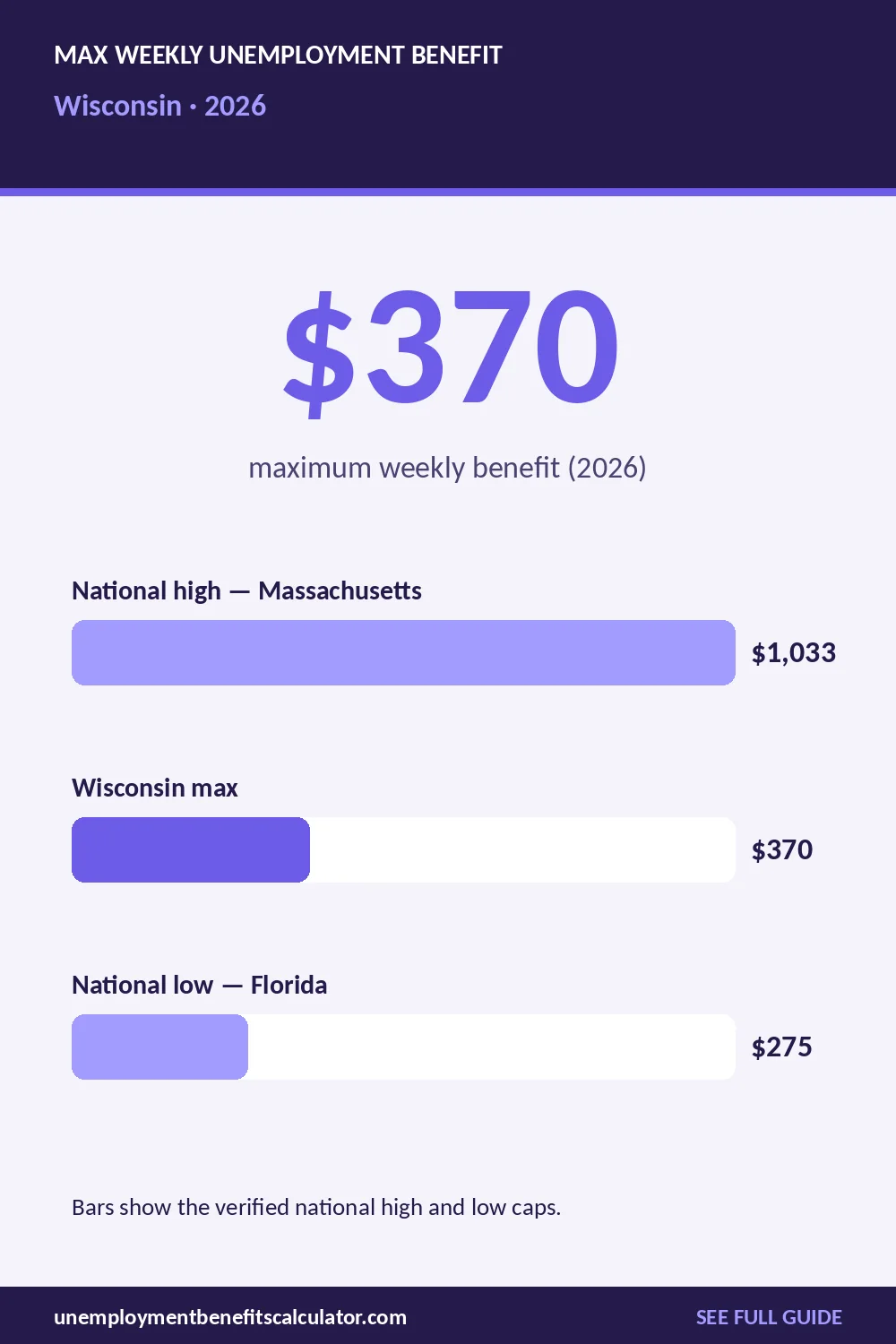
The mistake is baked into how most people read approval letters, and it is avoidable in five minutes. Wisconsin pays between $54 and $370 per week for up to 26 weeks, adds nothing for dependents, requires two documented work-search actions plus registration at JobCenterofWisconsin.com within 14 days, serves a one-week wait on every new claim, and gives you 30 days to appeal. (Wisconsin Department of Workforce Development, checked October 27, 2026)
Everything below follows the engineer's claim from the restructure notice through her final deposit, with the DWD rules attached at each step, so the waiting week, the registration deadline, and the certification rhythm arrive as planned events instead of surprises.
| Item | Wisconsin 2026 value |
|---|---|
| Maximum weekly benefit | $370 per week |
| Minimum weekly benefit | $54 per week |
| Dependent addition | None |
| Standard duration | Up to 26 weeks in a 52-week benefit year |
| Waiting week | Yes, one unpaid week per new benefit year |
| Work search | 2 documented actions per week, plus JobCenterofWisconsin.com registration within 14 days |
| Appeal window | 30 calendar days from the mailing date |
| State tax on benefits | Yes, Wisconsin income tax applies; no automatic withholding |
"But My Claim Was Approved" — Week One Still Pays Nothing
The DWD handbook states it plainly: for every new benefit year, no UI is payable for the first week you would otherwise be eligible. Approval and payment are different events. The engineer's claim was approved exactly on schedule, and the schedule includes the deductible. Claimants who understand this plan around it; claimants who do not, flood the help line at (414) 435-7069 every January, when benefit years roll over and the waiting week catches a fresh wave of filers.
There is a second-order trap worth naming: the waiting week must be claimed to be served. You file a weekly claim for that first week, answer the eligibility questions accurately, and receive nothing, and the record of that certified week is what lets week two pay. Skipping the first certification does not skip the deductible, it just delays everything by a week while the waiting week waits for you. Our waiting-week guide compares how states apply this rule and why Wisconsin's version is stricter than neighbors that pay from week one.
Plan the household cash for it. A claimant who loses work with a paycheck still coming for two weeks can time the filing so the served week overlaps with earned income, and the first-payment timeline guide shows what the full wait looks like: roughly two to four weeks from filing to first money, with the waiting week inside that span.
Read the $370 Ceiling Before You Plan Anything
Wisconsin builds the weekly rate from your base-period wages, floors it at $54, and caps it at $370. The engineer's $31-an-hour plant wage priced near the ceiling, so her letter read $370 with no dependent layer to add, because Wisconsin pays none. A retail supervisor at $22 an hour lands in the low $300s, and a seasonal resort worker with two strong quarters clears the floor easily. The calculation walkthrough reproduces the arithmetic before the letter arrives, and disagreement between your math and DWD's is an appeal item, not a shrug.
At the ceiling, a full 26-week run totals $9,620, and that number is the honest planning figure for anyone who spent the last year at $30-plus an hour. It is also the number to compare against the region: Minnesota's ceiling sits at $983, Illinois pays more per week, and Iowa's program lands close to Wisconsin's band, which the state-by-state comparison and the maximum-benefits table map in full. The engineer's twin in Duluth files Minnesota rules and collects more than double per week for the same history.
The wages that feed the calculation are covered employment wages only. Cash work, 1099 gigs, and self-employment sit outside it, and the monetary eligibility breakdown lists what counts. Workers whose last year was mixed W-2 and contract should read the self-employment guide before filing, because the payable result may surprise in both directions.
Register at JobCenterofWisconsin.com Within 14 Days
DWD's rule has a deadline inside it: register for work with the Job Center of Wisconsin within 14 days of completing the initial claim application, including an activated resume. Miss the registration and the agency can deny every week before the date you finally registered, which converts a paperwork slip into a benefit-year-long scar. The engineer registered the same afternoon she filed, which is the correct order of operations.
The two work-search actions each week ride on top of the registration. Wisconsin expects documented job-search activity every certified week, logged with dates and employer names, and the agency requests the log during audits. Keep the log current from week one rather than reconstructing it later, because reconstructed logs read like what they are. The work-search log guide shows the format that survives review, and the failed-search guide explains how weeks get reversed when the log cannot back the certification answers.
Can Work Share Prevent the Layoff Entirely?
Wisconsin runs a shared-work program that offers an alternative worth raising before the separation happens. Employers trim hours across the whole crew rather than cutting anyone loose, affected employees draw partial benefits on the lost fraction, and health coverage plus seniority survive until demand recovers. The engineer's plant ran a small version of it during the previous slowdown, and half her team never filed a claim at all.
The program serves employers as much as workers, since retention survives the trough, and the shared-work guide explains the employer-side setup and the employee-side arithmetic. Workers facing a reduced-schedule offer rather than a full layoff should read the reduced-schedule guide first, because refusing hours changes the eligibility picture in ways the certification questions will surface.
What Happens if You Move or Telework?
Location rules follow the work, not the address book. A Wisconsin claim filed on Wisconsin wages keeps Wisconsin rules even if the claimant relocates mid-claim, though the weekly answers change once availability spans states, and the relocation guide covers the notification duties. Moving out of the commuting area without a documented continued search is one of the quiet eligibility traps the certification questions expose.
Telework cuts the other way. A Wisconsin resident whose remote employer sits in Illinois or Minnesota files where the work is performed and supervised, which is not always where the laptop sits, and mixed histories can split wages across programs. The remote-worker guide sorts the filing-state question before the claim wastes a determination on the wrong agency. For the engineer's plant, none of this applied, but the human-resources office answered the question for two remote employees anyway, and both answers differed from what the employees assumed.
Certify Within 14 Days or Lose the Week Outright
Wisconsin allows up to 14 days to file each weekly claim, and the portal's hours run wide, Sunday from 9 a.m. to midnight and round the clock Monday through Friday. The engineer certified every Sunday evening except one, when a delayed shift pushed her to Tuesday, and the claim absorbed it because she was inside the window. The missed-deadline guide covers what happens past it: the week goes unpaid, and a late-filed week can be denied entirely.
Certification asks whether you worked, what you grossed, whether you were able, available, and searching. DWD pays within about seven days of a clean weekly certification, by direct deposit or the prepaid debit card, and the certification questions preview walks each screen. Batch-certifying several weeks at once is how clean claims sprout overpayment notices, so the one-week-at-a-time rhythm is a rule, not a suggestion.
Part-Time Pay and the Wisconsin Reduction
Part-time work coexists with the claim, and Wisconsin reduces the weekly benefit by the earnings formula rather than ending the claim. The engineer picked up two weekend CNC-training gigs in week nine, reported the gross, and saw a check for about half her usual amount with the claim fully intact. Gross earnings belong to the week the hours happened, never the week the money moved, and the reporting guide walks the edge cases with worked examples.
Weeks that gross near the $370 ceiling zero out the payment, which is the cliff every part-time claimant should learn before accepting hours. The part-time claiming guide and the disregard breakdown both run the numbers, and the reduction guide shows what a specific shift schedule does to a specific check at Wisconsin's rates.
What Freezes a Wisconsin Claim Mid-Flight
Employer contests come first. Wisconsin employers file frequent separations disputes, and any contest freezes payments until DWD's adjudication sorts the two accounts. The engineer's restructure was documented and clean; a line-mate whose exit was coded "attendance" spent six weeks frozen before his union-steward paperwork won the issue. The contest guide explains the freeze, the response deadline, and the evidence that resolves fastest.
Income offsets come second. Pensions from base-period employers reduce the weekly amount in the weeks they pay, and severance packages can push the claim's start entirely. Wisconsin treats certain separation packages as wages in lieu of notice, and the severance guide plus the lump-sum guide cover the allocation mechanics.
Overpayments come third, usually from certification slips that the wage match catches. A misreported week becomes a notice, an ignored notice becomes collections, and the overpayment guide lays out the response options while the matter is still negotiable. The engineer reported a training stipend late, answered the notice within the week, and closed it with a repayment plan and no penalty.
Do School Employees Follow the Same Calendar?
School employees file under a different frame, and it catches bus drivers, aides, and food-service workers every spring. Between-term breaks and scheduled summers carry a reasonable-assurance question, and a claim for a week the school year structure already covers gets denied no matter how clean the paperwork runs. The engineer's sister drives a district bus route, and her off-season claim hinged entirely on whether the district could promise her the same job in the fall.
The school-employee guide explains which between-term weeks can pay and which cannot, and the seasonal certification guide covers the answer patterns that keep between-season claims honest. The lesson is timing: file the week the school job actually ends, not the week the last paycheck clears, because the two dates read differently to adjudication.
The 30-Day Appeal Window and the ALJ
Wisconsin gives you 30 calendar days from the mailing date to appeal any determination, one of the more forgiving windows nationally. The first review happens with an administrative law judge over the phone, both sides sworn in. The engineer appealed her benefit computation once, when a quarter of wages sat missing from the file, and the corrected computation arrived before the hearing date because her final pay stub proved the point. The appeal walkthrough and the hearing guide describe the packet: pay stubs, the separation letter, shift schedules, and anything in writing that acknowledges the layoff.
Appeal deadlines and certification deadlines are independent. Keep certifying while an appeal runs, because a won appeal pays the certified backlog, and skipped weeks stay gone regardless of the outcome. The disqualification guide previews which separation codes need which evidence, so the appeal is assembled once, correctly.
Wisconsin Taxes, Withholding, and the 1099-G
Benefits are taxable income for the IRS and for Wisconsin's return, and DWD withholds nothing automatically. The optional 10 percent federal election is the only in-system withholding, so the Wisconsin tax arrives with the spring return. The engineer elected it deliberately, and her January 1099-G reported the year's total for both filings. Our unemployment tax guide works the math against the safe-harbor rules and shows what a $9,620 full run means for a typical filer's April.
The planning point at Wisconsin's rates is modest but real: roughly $96 a week set aside covers the combined layer at the ceiling for many filers, and the withholding election versus manual set-aside decision is worth ten minutes in week one, not week twenty.
Where $370 Sits Against the Neighbors
Wisconsin prices below every state that borders it except Iowa, and the gap is not close in the cases that matter. Minnesota's $983 ceiling pays more than double for identical histories, Illinois pays a higher weekly maximum, and Michigan's program clears Wisconsin's band as well. For a border-region worker with options about where the claim files, the comparison guide and the maximums table turn those differences into actual dollar figures, and the interstate guide explains why the state where the work happened files the claim, not the state where you sleep.
The engineer's Duluth twin is the standing lesson: same plant history, same layoff week, a $600-plus difference in the weekly check. Nobody relocates for UI, but workers who split years across state lines should know which state's rules their wages land under before the layoff picks for them.
Do These Six Things in Week One
- File the initial claim the week the job ends, not after the first paycheck would have landed
- Register at JobCenterofWisconsin.com with an activated resume inside the 14-day window
- Certify the waiting week accurately, knowing it pays nothing by design
- Log two work-search actions every certified week, dated, with employer names
- Enter gross earnings under the week the hours happened, ahead of the portal deadline
- Decide the 10 percent federal withholding election deliberately in week one
The engineer cleared all six and her claim ran clean to week 26, which is the normal outcome when the sequence is respected. Wisconsin's system is rigid but fair: the rules are published, the deadlines are real, and the waiting week only punishes people who did not plan for it. Do the six things while the layoff is fresh, keep certifying no matter what arrives in the mail, and treat every portal notice as a same-day read. Cross-check any rule that seems to have moved against the federal UI directory before relying on it, because Wisconsin's pages update without announcement.
Frequently Asked Questions
How much is unemployment in Wisconsin in 2026?
Between $54 and $370 per week, set by base-period wages, for up to 26 weeks. Wisconsin pays no dependent additions, so the weekly figure is the whole figure. Full-time claims at a typical Wisconsin wage arrive in the low $300s, and a full 26-week run at the ceiling totals $9,620 before taxes.
Does Wisconsin have a waiting week?
Yes. DWD's handbook is explicit: for every new benefit year, no UI is payable for the first week you would otherwise be eligible. You still file the weekly claim for that week, and the certified record is what unlocks week two. A claim filed the week work ends typically pays first money in week two of the claim.
What are Wisconsin's work search requirements?
Two documented work-search actions every certified week, plus registration with the Job Center of Wisconsin including an activated resume within 14 days of filing the initial claim. Missing the registration can deny every week before the date you registered, so it is the single deadline most worth respecting in the first two weeks.
How long do I have to file a weekly claim in Wisconsin?
Up to 14 days after the week ends. The online system runs Sunday from 9 a.m. to midnight and around the clock Monday through Friday, and a clean certification pays within about seven days. Past the 14-day window the week can be denied outright, which is why a fixed weekly rhythm beats catching up in batches.
Does Wisconsin tax unemployment benefits?
Yes. Benefits are taxable income for both the IRS and Wisconsin's return, and DWD withholds nothing automatically. The optional 10 percent federal election is the only in-system withholding, so plan for the Wisconsin layer separately, and expect the 1099-G every January with the prior year's total for both filings.
How many days do you have to appeal in Wisconsin?
30 calendar days counted from the determination's postmark, among the more forgiving windows nationally. The first review runs with an administrative law judge over the phone, both sides sworn. Keep certifying during the appeal, because a won determination pays the certified backlog while weeks you skipped stay gone regardless of outcome.