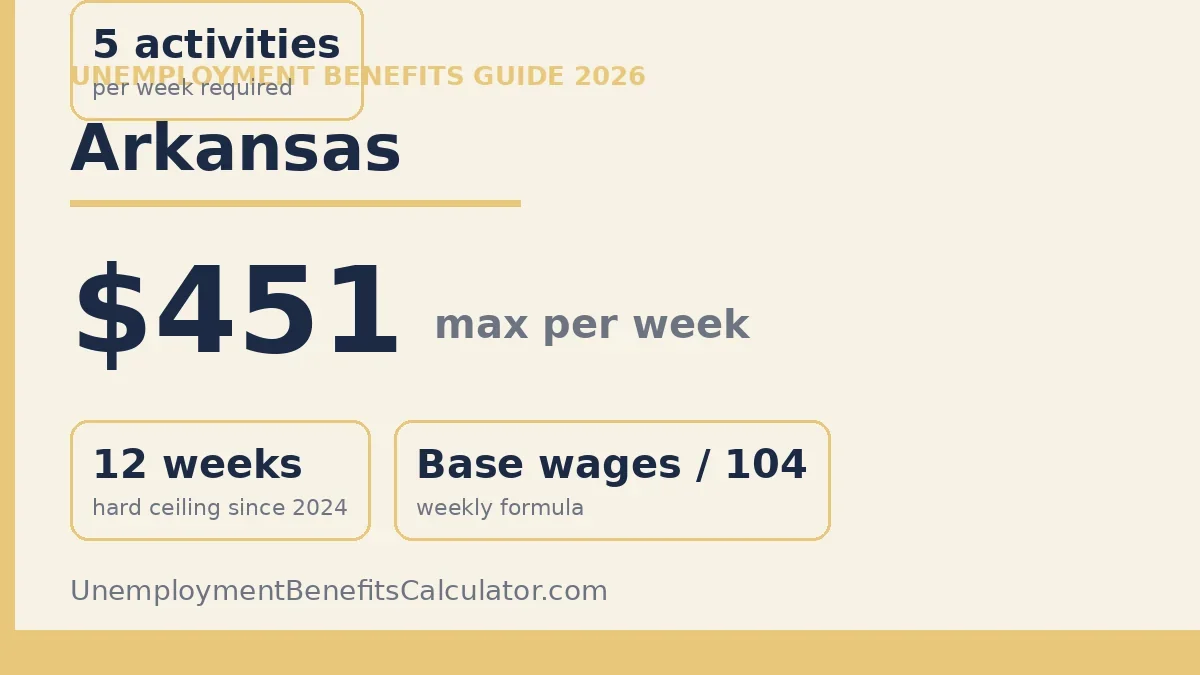
Quick Answer: Arkansas pays $81 to $451 per week in 2026. The state divides total base-period wages by 104, caps standard duration at 12 weeks, and holds one unpaid waiting week. Five weekly work-search activities and 20-day appeal windows frame the claim.
A Springdale poultry-line supervisor separates on the first Monday of January. Arkansas prices her record at $310 and hands her twelve weeks, one of them unpaid, against a $451 ceiling. Her claim tops out at $3,720 of payable checks.
This guide prices the claim with numbers the Division of Workforce Services handbook and the 2023 acts set. It covers the divide-by-104 formula, the wage tests, the 40 percent band, and the 20-day appeal clock. Figures were checked against the Department of Labor's July 2026 comparison.
The comparison frame drives the guide, because a 12-week runway only makes sense against neighboring states. The tables in the state-by-state comparison anchor that contrast.
| Item | Arkansas 2026 value |
|---|---|
| Weekly formula | Total base-period wages divided by 104 |
| Minimum weekly benefit | $81 |
| Maximum weekly benefit | $451 |
| Standard duration | 9 to 12 weeks, 12 the hard ceiling since 2024 |
| Waiting week | One unpaid week |
| Work search | Five qualifying activities per week |
| Part-time earnings | Up to 40 percent of the weekly rate ignored |
| Appeal window | 20 days from the mailing date |
A Springdale Claim From the First Week: $451 and Twelve Weeks
Here is the scenario claim, priced at $310 a week. The supervisor files in LAUNCH the week she separates. The monetary determination lists twelve weeks with one waiting week at the front.
Estimate Your Exact Weekly Benefit
State formulas use base-period wages, not your last paycheck. Your rate depends on your high quarter and the state cap.
Open the Free Arkansas Calculator →She certifies every week, including the waiting week, and logs five activities from week one. The checks run eleven payable weeks for $3,410 at her pricing. At the $451 ceiling, the same twelve weeks would total $4,961.
Act 196 of 2023 set that calendar. It cut maximum duration from 16 weeks to 12 for claims filed on or after January 1, 2024.
The lesson is the calendar, not the check.
The neighbors frame the exception. Mississippi pays a $235 maximum, Alabama $275 for 14 weeks, and Georgia $365. Florida pairs its $275 ceiling with a 9-to-12-week band like Arkansas, per the maximum benefits ranking.
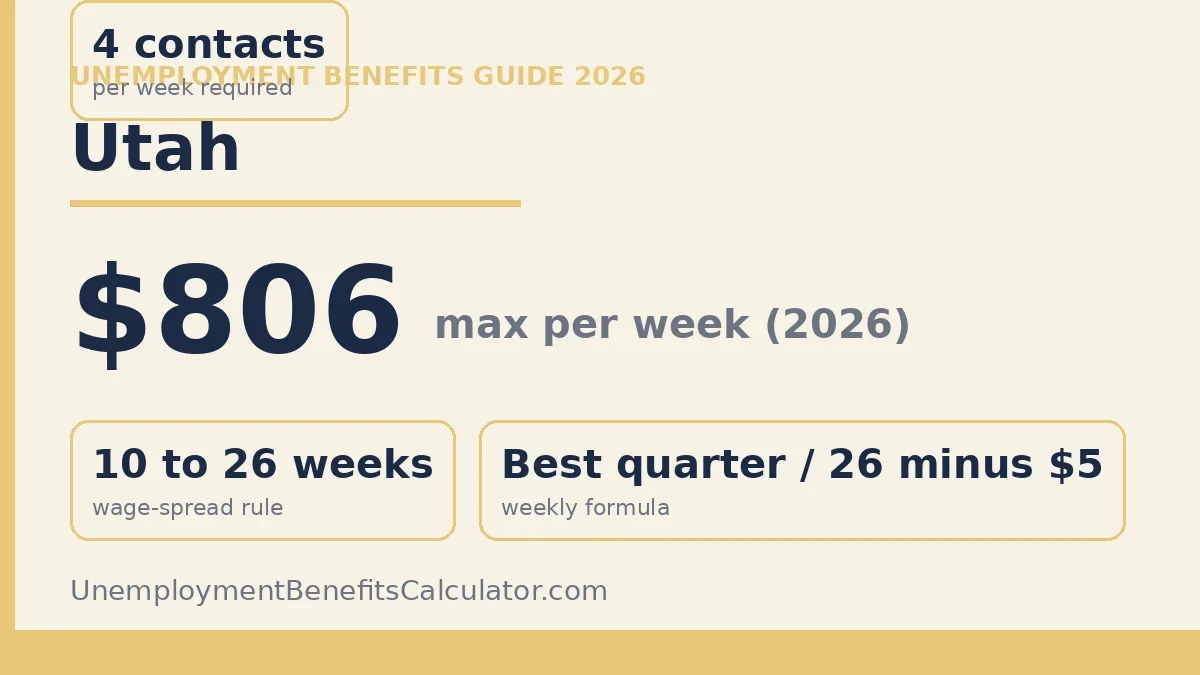
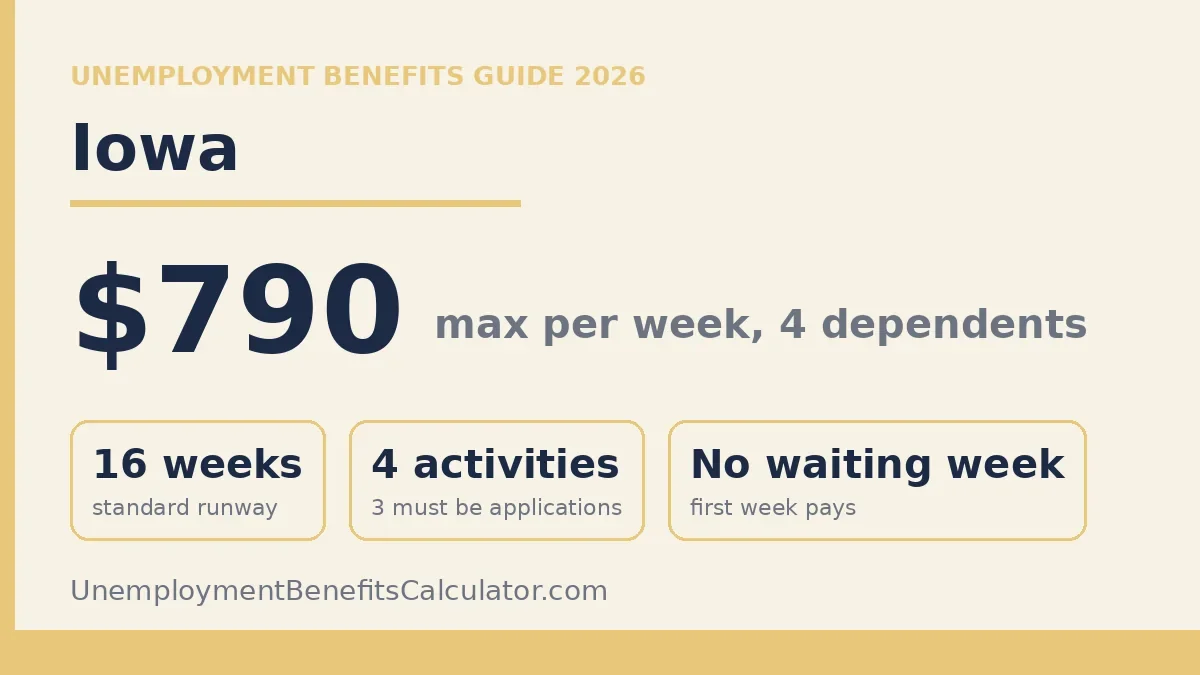
Iowa at $790 and Colorado at $884 sit in another league entirely. Arkansas's check is mid-pack, but its runway is the exception.
The Divide-by-104 Formula Behind the Check
Arkansas prices the week from all four base-period quarters, not the peak one. Add total base-period wages and divide by 104. That equals averaging the four quarters and dividing by 26.
Act 412 of 2015 moved the state off the highest-quarter method. A record of $12,000, $4,000, $4,000 and zero prices at $192 per week under the average. A highest-quarter formula would have paid $461 and slammed into the cap.
Seasonal and uneven earners take the haircut, while steady earners see little difference. The two approaches are quantified side by side in the formula comparison guide.
Results clamp between $81 and $451, rounded down to the whole dollar first. The base period takes the four oldest quarters from the trailing five that have closed.
The calendar window is mapped in the base period explainer. The earnings requirements walkthrough maps the wage records standing behind the formula.
The handbook notes that the balance rounds upward to a weekly multiple under the statute, so some determinations show an odd final figure.
The trailing-quarter window means the same worker prices differently by filing month. That is a feature to exploit.
Clear the Two-Quarter and 35-Times Tests
Monetary qualification runs through two gates. Wages must come from covered employers in two or more base-period quarters. Total base wages must reach 35 times the weekly benefit produced.
The 35-times test links duration to wages. A $300 weekly figure implies roughly $10,500 in base wages at full value. Run the arithmetic with the benefit estimation guide before filing.
The two-quarter rule rejects records concentrated in a single quarter regardless of size. Part-year and new-to-workforce claimants hit it first.
Thin records get their own playbook in the no-work-history guide, and low-wage scenarios live in the minimum wage guide.
Workers whose recent quarter was their strongest should check the trailing-five window. The quarter maps in the base period guide show it. Filing six weeks later can change the whole window.
What Can You Earn While Claiming in Arkansas?
Arkansas ignores part-time earnings up to 40 percent of the weekly benefit amount. A claimant pricing at $300 keeps wages up to $120 with no deduction at all.
Wages above the band deduct dollar for dollar from the check. Gross earnings at 140 percent of the weekly rate, $420 at the $300 pricing, pay nothing for the week.
Full-time work, defined as 40 hours, wipes out the week's eligibility no matter what it pays.
The 40 percent disregard is what makes bridge employment worthwhile in Arkansas. The mechanics are drawn in the partial earnings guide, with the cross-state comparison in the part-time reduction guide.
Report the week's gross wages in the week the work occurred, inside the 14-day limit. The formats live in the income reporting guide.
Misreported weeks feed the overpayment system in the overpayment playbook. Deliberate underreporting triggers the fraud penalties summarized in the disqualification overview.
The band applies per week, not per month. A single heavy week changes only that week's payment.
File in LAUNCH With This Checklist
Arkansas intake runs through the LAUNCH system on the division's site. The Arkansas Division of Workforce Services also posts the handbook behind every figure here.
The checklist: Social Security number or alien registration number, mailing and physical address, phone, and the last employer's name and address. Add bank routing details for direct deposit, or take the U.S. Bank ReliaCard instead.
Staffing-agency workers name the agency, not the client, per the temp agency guide. Teachers and school staff face between-term rules in the school employees guide.
File the week work stops, because nothing backdates. The waiting week and the effective-date clock both run off the filing calendar.
The weekly certification runs in LAUNCH or by phone through ArkLine. It covers the Sunday-to-Saturday week and must land within 14 days of the week ending.
The certification questions sit in the certification guide, the phone option in the phone certification rules. The post-filing sequence is laid out in the post-filing timeline.
Log Five Work-Search Activities Every Week
Act 587 of 2023 raised the weekly search standard to at least five qualifying activities. A week without the five contacts makes the claimant ineligible for that week outright.
Report the activities in LAUNCH or through ArkLine with the certification. The search log guide ships prebuilt log formats, while the work search overview summarizes the structure.
Exemptions are narrow, and this is the strictest standard in the series. Recall-expected workers and union hiring hall members follow the furlough guide and the union guide.
Approved training participants substitute program participation, per the training guide. Everyone else documents five real, distinct, dated activities weekly.
The failure consequences in the failed requirements guide arrive as lost weeks. Job fairs and networking count only within the activity definitions in the networking rules.
"I Was Fired for Attendance" and Other Separation Traps
Arkansas draws the misconduct line case by case. The employer says misconduct, and the worker cites a health issue or a schedule the employer itself created. Attendance traps land here in every appeal cycle.
The state disqualifies separations for misconduct connected to the work. That means careless or deliberate behavior showing disregard for the employer's interests. Ordinary inability or unsatisfactory performance does not bar benefits.
The hearings sort out denial patterns for three situations: being fired, absenteeism, and poor performance.
Quits carry their own test, good cause connected to the job. The standards sit in the quit guide and the good cause explainer.
Pressure resignations are covered in the pressure resignation guide, and constructive discharge in the constructive discharge guide.
The employer's contest starts its own evidence clock, described in the employer contest guide. Your best move is documentation from day one.
The 20-Day Appeal Clock at the Tribunal
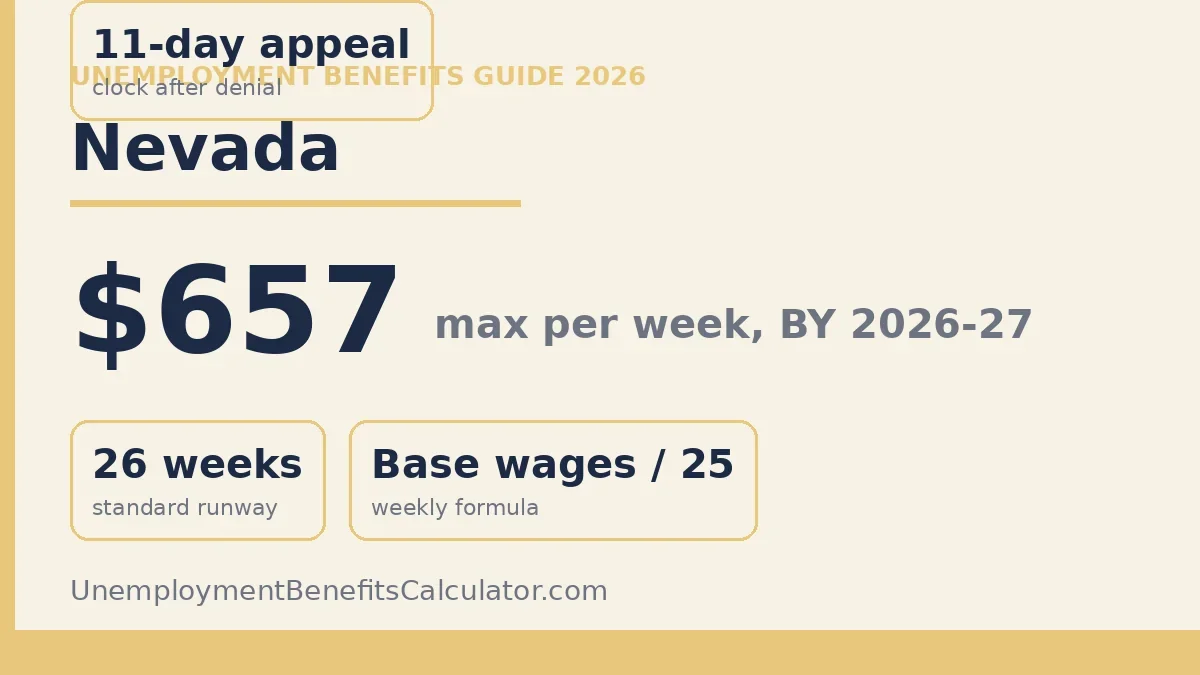
A denial opens a 20-day appeal window from the mailing date. File with the Arkansas Appeal Tribunal by mail, email, fax, or in person at a local office. Attach a copy of the notice.
The Tribunal's decision opens a further 20 days to the Board of Review. A petition to the Court of Appeals follows within 30 days after that.
Keep certifying weekly through every level. The weeks on file are the weeks a winning appeal pays. The full sequence is laid out in the denial appeal guide.
Prepare the Tribunal hearing as the decisive round, because most matters end there. Organize separation documents, attendance records, and messages, and rehearse with the hearing preparation guide.
Payment delays during an active claim run on a separate track, triaged in the payment delay guide. Claim status questions belong in the status guide instead.
Compare Arkansas With the Neighboring Runways
Arkansas's $451 ceiling beats Mississippi's $235, Alabama's $275, and Florida's $275 comfortably, and it edges Georgia's $365.
The 12-week ceiling compresses the total package below every 20-plus-week neighbor. Alabama's 14 weeks at a lower cap can out-total Arkansas. Georgia's 26-week ladder dwarfs the $5,412 Arkansas ceiling on mid-range claims.
The full table in the state comparison and the duration map in the duration guide carry the complete rankings.
Multi-state work histories turn the comparison into a filing decision. The state where the claim is filed follows the wages that state's employers paid, per the interstate guide.
Relocation plans mid-claim run through the moving guide. Workers weighing a training detour should compare the 12-week runway against program lengths in the school guide.
What Takes From the Check at Tax Time?
Benefits are taxable on the federal return, and Arkansas taxes them as income on the state return too. The division offers federal withholding by election rather than by default.
A 1099-G lands in January with the annual total. The unemployment tax guide stacks the filing decisions, while the payment methods guide compares payout options.
Child support obligations intercept through the standard machinery. Severance and vacation pay allocate to specific weeks under the rules in the severance guide and the severance timing guide.
Pension income offsets follow the patterns in the pension guide and the Social Security guide. Every deduction reduces the 12 payable weeks' value.
The Arkansas Claim Checklist
Work the list top to bottom in the first week after separation, and the 12-week runway holds its full value.
First, run the divide-by-104 arithmetic and the 35-times test with the estimation guide. Second, file in LAUNCH the week work stops, and read the determination letter against the post-filing timeline.
Third, serve and certify the waiting week, then certify each week within the 14-day window. Report every dollar of gross earnings using the reporting guide.
Fourth, log five qualifying activities every week from day one, documented per the search log template and reviewed against the requirements overview.
Fifth, calendar the 20-day appeal window for any determination you dispute. Prepare the Tribunal hearing per the hearing guide, and keep certifying through every level.
Sixth, decide the withholding election and plan the 1099-G against the tax guide before the checks start. Twelve weeks is the calendar Arkansas sets, and this list is how it pays.
Check Your Arkansas Estimate in 2 Minutes
Enter your quarterly wages to see your estimated weekly benefit, your maximum duration, and where the cap applies.
Calculate Your Benefits Now →Frequently Asked Questions
How much is unemployment in Arkansas in 2026?
Between $81 and $451 per week. Arkansas averages all four base-period quarters and divides by 26, which equals total wages divided by 104. A $20,000 record across four quarters prices at $192 per week under the average.
How many weeks does Arkansas unemployment pay?
Nine to twelve weeks, with twelve the hard ceiling for claims filed on or after January 1, 2024 under Act 196 of 2023. The monetary determination states the exact count. One unpaid waiting week precedes the payable weeks.
Is there a waiting week in Arkansas?
Yes. The first eligible week is an unpaid waiting week, and the handbook instructs claimants to certify for it and meet every condition. Eleven payable weeks follow a twelve-week determination at full value, so budget for the gap.
How many work searches does Arkansas require?
At least five qualifying activities per week, reported in LAUNCH or through ArkLine with the certification. A week without the five contacts makes the claimant ineligible for that week. Narrow exemptions cover recall expectations and training.
Can I work part-time and collect Arkansas unemployment?
Yes. Wages up to 40 percent of the weekly benefit amount are ignored entirely, and earnings above that band deduct dollar for dollar. Gross earnings at 140 percent of the weekly rate zero the payment.
How do I appeal an Arkansas unemployment denial?
Appeal within 20 days of the mailing date to the Appeal Tribunal by mail, email, fax, or in person. The decision opens 20 days to the Board of Review, then 30 days to the Court of Appeals. Keep certifying weekly.
How do I certify weekly benefits in Arkansas?
Certify each Sunday-to-Saturday week in LAUNCH or by phone through ArkLine. The certification must land within 14 days of the week ending. Report your gross earnings for each week worked, and keep logging five work-search activities.
Are Arkansas unemployment benefits taxable?
Yes. Benefits are taxable on the federal return and as income on the Arkansas state return. The division offers federal withholding by election, and the January 1099-G states the total. Payments move by direct deposit or the ReliaCard.